
Commercial Aviation
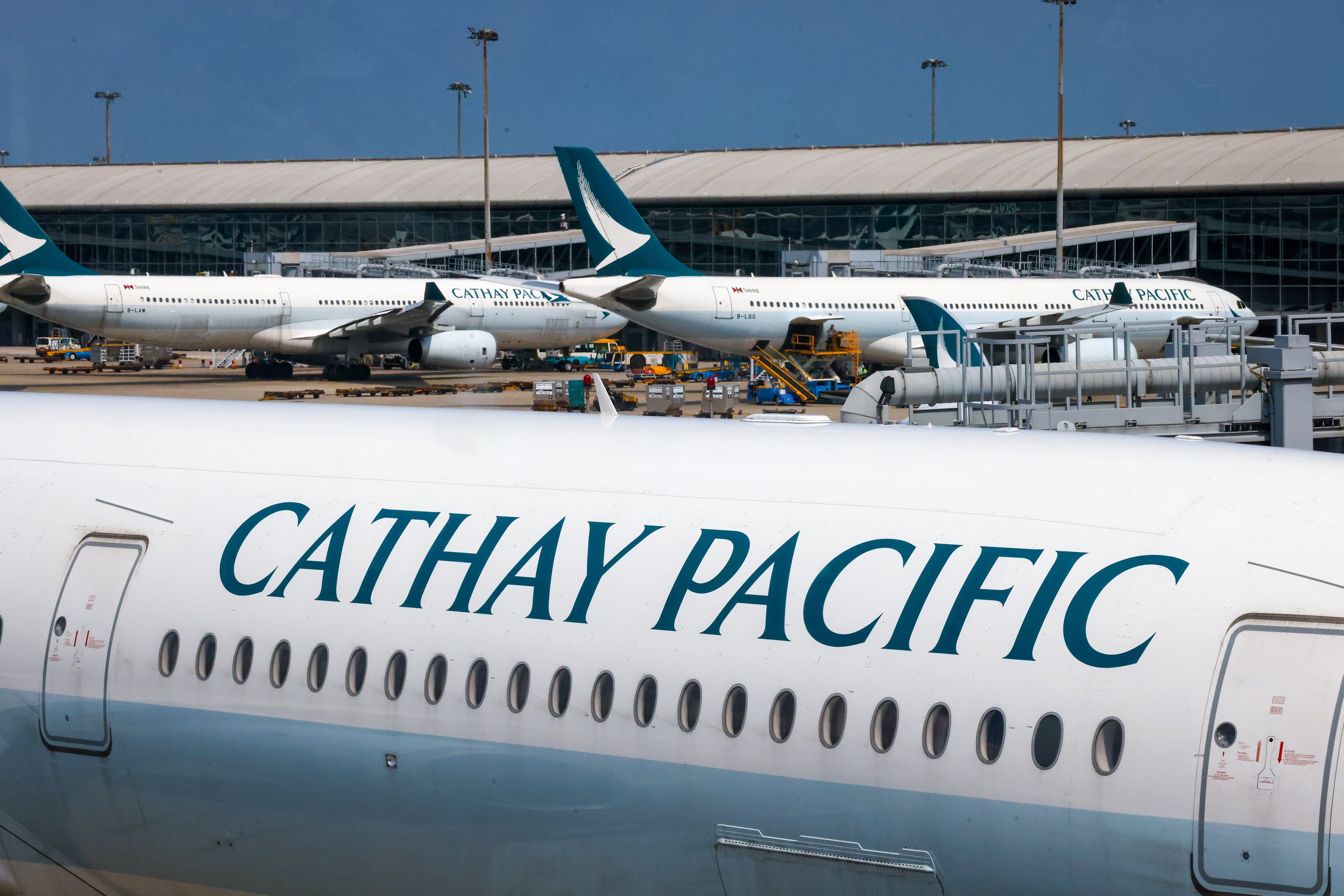
Cathay Pacific’s 40% Capacity Surge in China Summer Flights 2025
Hong Kong airline expands to 300 weekly mainland China flights targeting economic hubs, backed by HK$100B modernization plan and global route network growth.

As global air travel continues its post-pandemic recovery, Cathay Pacific has positioned itself at the forefront of Asia’s aviation resurgence. The Hong Kong-based carrier recently announced plans to operate nearly 300 weekly return flights to 20 Chinese destinations during the 2025 summer season, marking a 40% capacity increase compared to 2024. This expansion underscores Cathay’s dual role as both a regional connector and global aviation player.
The move comes as China’s domestic travel market shows robust growth, with IATA reporting a 21.8% year-on-year passenger demand increase in Asia-Pacific for January 2025. For Hong Kong, this expansion represents more than just route development – it’s a strategic play to reinforce its position as an international aviation hub while strengthening economic ties with mainland China.
Cathay’s summer schedule reveals a calculated focus on China’s key economic zones. The Beijing-Tianjin-Hebei megacity cluster and Yangtze River Delta region will receive enhanced connectivity, with Beijing seeing 56 weekly return flights split between Capital and Daxing airports. Shanghai’s dual airports will collectively handle 67 weekly Cathay flights, including 11 weekly services to Hongqiao – a rare international route from this downtown facility.
The carrier is deploying a tiered approach to regional connectivity:
“Our expanded mainland network isn’t just about volume – it’s about creating strategic links between China’s innovation hubs and global markets,” says Lavinia Lau, Cathay’s Chief Customer Officer.
While mainland China forms the core of this expansion, Cathay is simultaneously extending its global reach. The group plans to serve over 100 destinations worldwide by 2025’s end, adding 13 new routes including Dallas, Rome, and Brussels. This dual-axis growth strategy positions Hong Kong as a bridge between China’s economic powerhouses and key Western markets.
The airline’s HK$100 billion investment plan (2025-2032) supports this expansion, funding:
Scaling operations at this pace presents both hurdles and advantages. Cathay plans to increase mainland Chinese staff from 3,000 to 4,000 by 2025’s end, particularly recruiting flight crews fluent in Mandarin and Cantonese. This localization strategy aims to improve service quality for mainland travelers who now constitute 35% of Cathay’s customer base.
The Urumqi route launch (4 weekly flights from April 28) exemplifies Cathay’s niche market strategy. As the first international carrier to offer direct Hong Kong-Xinjiang service, Cathay taps into both business traffic from China’s western development initiatives and adventure tourism demand. Cathay’s expansion arrives as Hong Kong International Airport completes its third runway system, boosting annual capacity to 120 million passengers. Aviation analysts predict the enhanced mainland connectivity could contribute HK$23 billion annually to Hong Kong’s economy through tourism and business travel.
The airline’s cargo division stands to benefit significantly, with increased belly capacity on mainland routes supporting Hong Kong’s position as the world’s busiest air cargo hub. Recent partnerships with SF Express and JD Logistics create integrated supply chain solutions leveraging the expanded passenger network.
“Every new mainland route strengthens Hong Kong’s relevance in the Greater Bay Area ecosystem,” notes aviation analyst Li Wei. “Cathay isn’t just moving passengers – they’re facilitating capital flows and technological exchange.”
Cathay Pacific’s summer expansion represents a strategic inflection point for Asian aviation. By doubling down on mainland China connections while extending global reach, the carrier positions Hong Kong as the Asia-Pacific’s premier transit hub. The 40% capacity increase reflects confidence in sustained travel demand despite economic headwinds.
Looking ahead, Cathay’s success hinges on balancing operational scale with service quality. As the group implements its HK$100 billion modernization plan, industry watchers will monitor how effectively it integrates sustainable practices and digital innovation. With mainland China’s aviation market projected to surpass the US by 2030, Cathay’s current investments may prove prescient in capturing Asia’s next growth wave.
How many destinations is Cathay Pacific adding in 2025? What’s driving Cathay’s focus on mainland China? How will this affect flight prices? Sources:
Cathay Pacific’s Strategic Summer Expansion in China
Focus on Strategic Economic Regions
Global Network Synergy
Operational Challenges and Opportunities
Economic Implications and Future Outlook
Conclusion
FAQ
Cathay will add 13 new global destinations including Dallas and Rome, plus Urumqi as its 20th mainland Chinese destination.
Post-pandemic recovery, Hong Kong’s hub strategy, and China’s projected 8.2% annual growth in outbound travel through 2030.
Increased capacity typically stabilizes fares, but premium cabin demand on key routes may maintain pricing power.
Travel Radar,
Cathay Pacific News,
China Daily



Commercial Aviation
Finnair Announces Fleet Renewal Strategy with Embraer and Airbus Jets
Finnair plans fleet modernization from 2026 to 2029 with Embraer E195-E2 orders, used Airbus A320/A321 acquisitions, and leased regional aircraft.
This article is based on official press releases from Finnair.
Finnair has officially launched one of the most significant capital investments in its recent history, announcing a comprehensive modernization and expansion of its narrowbody and regional fleet. According to official company press releases issued in late March 2026, the Finnish flag carrier is adopting a multi-pronged approach to secure capacity, reduce emissions, and feed its Helsinki long-haul hub.
The strategy, rolled out across two major announcements on March 23 and March 30, 2026, includes a substantial order for next-generation Embraer E195-E2 jets, the acquisition of used Airbus A320 and A321ceo aircraft, and immediate short-term leases for regional turboprops and jets. This fleet renewal serves as the cornerstone of Finnair’s 2026–2029 strategic period under the leadership of CEO Turkka Kuusisto, who took the helm in January 2024.
Having successfully navigated the dual crises of the COVID-19 pandemic and the closure of Russian airspace, which severely disrupted its traditional Asian routing, Finnair is now pivoting toward profitable growth. The airline stated that these fleet decisions are essential to achieving its target comparable EBIT margin of 6 to 8 percent by 2029.
At the heart of Finnair’s regional strategy is a major commitment to Embraer’s next-generation E2 family. On March 23, 2026, the airline announced an agreement encompassing up to 46 Embraer E195-E2 aircraft. The deal includes 18 firm orders, 16 options, and 12 purchase rights.
According to the company’s specifications, the new jets will feature a 134-seat configuration and will be powered by Pratt & Whitney PW1900G GTF engines. Finnair confirmed it has also signed a separate maintenance and spare engine agreement with RTX’s Pratt & Whitney. Deliveries are scheduled to commence in the third quarter of 2027, with three aircraft arriving that year, followed by six in 2028, and six in 2029. The aircraft will be operated by Finnair’s regional partner, Nordic Regional Airlines (Norra).
“The Embraer E195-E2 is a great match for our needs, enabling a stronger regional network that both strengthens connectivity to and from Finland, and efficiently feeds our long-haul network,” said Finnair CEO Turkka Kuusisto in the official release.
While the E195-E2 deliveries are slated for 2027, Finnair is also moving to secure immediate regional capacity. In a subsequent announcement on March 30, 2026, the airline revealed it had signed Letters of Intent (LOIs) to lease two Embraer E190-E1 and two ATR 72-600 aircraft.
These leased aircraft are expected to join the Norra fleet by the summer and early autumn of 2026, increasing Norra’s total jet fleet to 18. Finnair noted that this immediate capacity injection will support its robust summer 2026 schedule, which features over 90 European destinations and 12 new routes. “An extensive regional network plays an important role as we seek to grow our network from our key markets. These aircraft will further strengthen our schedule reliability and add to the flexibility of our fleet deployment,” stated Christine Rovelli, Chief Revenue Officer at Finnair.
In tandem with its regional expansion, Finnair is addressing its aging narrowbody mainline fleet. The airline announced plans to acquire up to 12 used Airbus A320 and A321ceo aircraft from the secondary market. This move is designed to replace retiring, older A319s and A320s.
Finnair described this acquisition as a capital-efficient “bridge solution.” By tapping into the secondary market, the airline ensures capacity continuity and operational flexibility while older jets are phased out, avoiding the lengthy delivery backlogs currently affecting new Airbus A320neo family aircraft.
“This mix of new and used aircraft supports our growth and profitability targets in an optimal way, as we continue to implement our strategy,” Kuusisto explained. “A mix of larger and smaller narrow-bodies allows us to tap into the growth opportunities in our markets in a flexible and efficient manner.”
The comprehensive fleet renewal fits within Finnair’s stated €2 to €2.5 billion capital investment budget for the 2026–2029 period. The airline is targeting a passenger demand compound annual growth rate (CAGR) of 4 percent over this timeframe.
Sustainability remains a key driver of the investment. Finnair reported that the new Embraer E195-E2 aircraft offer up to a 35 percent improvement in fuel efficiency compared to the previous-generation E190s currently in operation. Kuusisto emphasized that the introduction of the E195-E2 will directly reduce the airline’s CO₂ footprint, advancing its science-based climate targets.
Finnair’s late-March announcements highlight a highly pragmatic approach to fleet planning in an era of constrained aerospace supply chains. By opting to acquire used Airbus A320/A321ceos, Finnair is effectively bypassing the severe delivery delays and supply chain bottlenecks currently plaguing major manufacturers like Boeing and Airbus. This “bridge solution” allows the airline to maintain schedule reliability and protect its balance sheet without over-leveraging for new mainline narrowbodies.
Furthermore, the heavy reliance on Nordic Regional Airlines (Norra) to operate the expanded Embraer fleet underscores a broader European aviation trend. Legacy carriers are increasingly utilizing regional production platforms to maintain cost-effective, high-frequency feeder networks into their primary hubs. For Finnair, doubling seat capacity on key regional routes via the E195-E2 order is a clear signal that feeding the Helsinki hub remains the lifeblood of its post-Russia airspace strategy.
When will Finnair receive its new Embraer E195-E2 aircraft? Why is Finnair buying used Airbus aircraft instead of new ones? Who will operate the new regional aircraft?
Finnair Unveils Major Fleet Overhaul to Drive 2026–2029 Strategy
The Embraer E195-E2 Order and Regional Expansion
Immediate Capacity Boost for Summer 2026
Bridging the Gap with Used Airbus Jets
Financial and Sustainability Targets
AirPro News analysis
Frequently Asked Questions
According to the company, deliveries will begin in the third quarter of 2027. Finnair expects to receive three aircraft in 2027, six in 2028, and six in 2029, with the remaining firm orders arriving subsequently.
Finnair is acquiring up to 12 used A320 and A321ceo aircraft as a capital-efficient “bridge solution” to replace retiring A319s and A320s. This strategy provides immediate capacity and flexibility without waiting for backlogged new aircraft deliveries.
Both the newly ordered Embraer E195-E2 jets and the immediately leased E190-E1 and ATR 72-600 aircraft will be operated by Finnair’s regional partner, Nordic Regional Airlines (Norra).
Sources
Photo Credit: Montage
Route Development
Noida International Airport Inaugurated with 12M Passenger Capacity
Noida International Airport inaugurated in March 2026, designed for 12 million passengers annually with flights starting mid-April 2026.
This article summarizes reporting by Hindustan Times. As the original report may be subject to premium access restrictions, this article summarizes publicly available elements and supplementary historical data.
On March 28, 2026, Prime Minister Narendra Modi officially inaugurated the first phase of the Noida International Airport, widely known as Jewar Airport, located in Gautam Buddha Nagar, Uttar Pradesh. According to reporting by the Hindustan Times, this milestone infrastructure achievement has immediately ignited a fierce political contest over who deserves credit for the mega-project.
We observe that as the state gears up for future electoral battles, major political factions are actively vying to claim the airport’s legacy. The inauguration has prompted statements from former Chief Ministers and current state leadership, each highlighting their respective roles in navigating the project’s complex, two-decade development cycle.
A day after the inauguration, Bahujan Samaj Party (BSP) President and former Uttar Pradesh Chief Minister Mayawati took to social media to assert her administration’s role in the project. According to the Hindustan Times, Mayawati claimed that the essential foundational groundwork and initial blueprints for the Jewar Airport were established while the BSP was in power.
She further alleged that the project faced severe administrative and regulatory hurdles created by the then Congress-led United Progressive Alliance (UPA) government at the Centre. Mayawati argued that without these roadblocks, the airport would have been completed much earlier, drawing a parallel to the successful execution of the Yamuna Expressway.
The BSP leader also directed criticism at the Samajwadi Party (SP). She accused the subsequent SP government of neglecting regional development and poverty alleviation. Instead, she claimed, the SP focused on reversing welfare initiatives and engaging in politically motivated actions, such as renaming institutions associated with Bahujan movement icons.
The political maneuvering extends beyond the BSP. Samajwadi Party President Akhilesh Yadav has also claimed credit for the airport’s realization. During a recent rally in Dadri, Yadav stated that his government was responsible for securing the necessary clearances that ultimately allowed the project to move forward.
These assertions were swiftly countered by the ruling Bharatiya Janata Party (BJP). On March 30, 2026, UP Chief Minister Yogi Adityanath strongly rebuked the SP’s claims, highlighting the region’s troubled past before 2017. Chief Minister Yogi Adityanath referred to the previous administration as a “bottleneck to development,” according to public remarks.
Adityanath emphasized that his government successfully resolved massive real estate and infrastructure deadlocks, transforming the area from a “crime capital” into a hub of economic growth.
The history of the Noida International Airport is marked by shifting political priorities and significant regulatory challenges. Historical data indicates that the concept for a greenfield airport in Jewar was first introduced in 2001 during the tenure of then-UP Chief Minister Rajnath Singh.
The proposal gained momentum under Mayawati’s administration, receiving preliminary clearances in 2002 and being revived in 2007 as the “Taj International Aviation Hub.” However, the project was shelved in 2003 by the Mulayam Singh Yadav-led SP government. Between 2012 and 2016, the Akhilesh Yadav administration explored alternative sites, including Agra and Saifai, which contributed to further delays.
A primary regulatory hurdle during the UPA era was a civil aviation policy that restricted the construction of new greenfield airports within a 150-kilometer radius of an existing facility, in this case, Delhi’s Indira Gandhi International Airport. This 150-km rule was eventually relaxed by the National Democratic Alliance (NDA) government in 2016. Following the BJP’s state election victory in 2017, the project was fast-tracked, culminating in the foundation stone laying in November 2021.
To understand the scale of the newly inaugurated facility, we look at the verified operational statistics provided in recent project briefings. The first phase of the Noida International Airport is designed to handle 12 million passengers annually.
The infrastructure includes a 3,900-meter runway, a sprawling 137,985-square-meter passenger terminal, and 28 aircraft stands. Additionally, the facility boasts a projected cargo capacity of 250,000 tonnes, positioning it as a vital logistics hub for northern India.
While the official inauguration took place on March 28, 2026, commercial flight operations are expected to commence within 45 to 60 days, placing the launch between mid-April and May 2026. IndiGo is slated to be the launch carrier, initially offering limited domestic flights.
The economic impact is projected to be substantial. The airport will serve as a major alternative to Delhi’s IGI Airport, boosting regional connectivity and tourism for cities like Agra, Mathura, Aligarh, and Meerut. Chief Minister Yogi Adityanath has publicly stated that, at full capacity, the airport is expected to generate employment for 100,000 youths. We note that the inauguration of the Noida International Airport serves as a critical focal point for pre-election posturing in Uttar Pradesh. By highlighting past infrastructure blueprints, the BSP is strategically attempting to reclaim political space and remind voters of its historical development record. Furthermore, Mayawati’s renewed demands for a separate High Court bench and statehood for western Uttar Pradesh indicate a targeted appeal to regional sentiments.
The ruling BJP, meanwhile, continues to leverage the airport as a prime example of its “double-engine” governance model, contrasting current progress with the administrative deadlocks of previous regimes. As commercial operations begin, the narrative surrounding the airport’s success will likely remain a highly contested talking point in upcoming electoral campaigns.
Commercial flight operations are expected to commence within 45 to 60 days of the March 28, 2026 inauguration, likely between mid-April and May 2026. IndiGo is scheduled to be the launch carrier.
In its first phase, the Noida International Airport is designed to handle 12 million passengers annually.
The project faced multiple delays over two decades due to shifting political priorities among state governments and a previous federal civil aviation rule that restricted new airports within 150 kilometers of an existing one (Delhi’s IGI Airport). This rule was relaxed in 2016.
Sources: Hindustan Times

The Political Battle for Credit
Mayawati’s Claims and Accusations
Counterclaims from SP and BJP
A Two-Decade Journey to Inauguration
Overcoming Regulatory and Political Roadblocks
Noida International Airport by the Numbers
Phase 1 Infrastructure and Capacity
AirPro News analysis
Frequently Asked Questions
When will commercial flights begin at Noida International Airport?
What is the passenger capacity of the new airport?
Why was the airport project delayed for so long?
Photo Credit: MusafirBaba
Route Development
Florida Renames Palm Beach Airport to President Donald J Trump International
Florida officially renames Palm Beach International Airport to President Donald J Trump International Airport, effective July 2026 with state preemption over naming rights.
On Monday, March 30, 2026, Florida Governor Ron DeSantis signed legislation officially renaming Palm Beach International Airports to “President Donald J. Trump International Airport.”
According to reporting by Reuters, this legislative move is the latest instance of public infrastructure, government programs, and institutions being renamed to honor the U.S. president. The decision highlights the president’s strong ties to Palm Beach County, where his Mar-a-Lago estate is located.
While supporters celebrate the renaming as a fitting tribute, the legislation has sparked debate over state preemption, taxpayer spending, and the rapid branding of public assets.
The renaming was executed through the passage of House Bill 919 and Senate Bill 706, which cleared the Florida legislature strictly along party lines. The House voted 81–30 in favor, while the Senate approved the measure 25–11.
A central and controversial component of the new law is its use of state preemption. The legislation grants the Florida state government exclusive authority to name the state’s seven major commercial airports. This effectively strips local county governments of their ability to block or alter such decisions. Of the seven facilities, only the Palm Beach airport is currently being renamed.
Opponents of the bill have voiced strong objections to this maneuver. U.S. Representative Lois Frankel, a Democrat from West Palm Beach, criticized the state’s preemption of local naming rights.
“Misguided and unfair,” U.S. Representative Lois Frankel stated, arguing that Palm Beach County residents deserved a voice in the renaming of their local airport.
The official name change is slated to take effect on July 1, 2026. However, the transition requires federal coordination. The Federal Aviation Administration (FAA) must process the updates across its flight charting and navigation databases before the change is fully operational.
To align with the new name, U.S. Representative Brian Mast has introduced federal legislation aimed at changing the airport’s official three-letter identifier code from “PBI” to “DJT.” Financially, the Florida state government has allocated $2.75 million to cover the costs of new signage and rebranding efforts. Initial legislative requests had projected that total costs could reach up to $5.5 million. These funds are expected to be drawn from existing airport revenues or state grants.
In February 2026, DTTM Operations LLC, a management entity under The Trump Organization, filed applications with the U.S. Patent and Trademark Office. The filings seek exclusive rights to the new airport name and related merchandise, such as luggage and flight suits.
The Trump Organization stated that the trademark applications were a defensive measure to protect against “bad actors” infringing on the brand.
The company explicitly clarified that the president and his family will not receive any royalties, licensing fees, or financial compensation from the airport’s renaming. Furthermore, the new Florida law makes the brand identity change contingent upon a commercial use agreement between Palm Beach County and Trump, which is expected to pass smoothly.
Supporters of the legislation emphasize the president’s deep local connections. Representative Meg Weinberger, a co-sponsor of the bill, pointed out that Trump’s Mar-a-Lago estate is located just five miles from the airport and that he is the first U.S. president to claim Florida as his primary residence. State Senator Debbie Mayfield added that the renaming honors his administration’s policies on border security and drug trafficking.
As Reuters reported, the Palm Beach airport is part of a much larger wave of assets adopting the president’s name. In December 2025, the John F. Kennedy Center for the Performing Arts board voted to rename the venue the “Trump Kennedy Center.” Additionally, his name has been attached to a planned class of Navy warships, federal savings accounts for children, and a visa program. The U.S. Treasury also announced that American paper currency will feature his signature starting in the summer of 2026.
We observe that the scale and speed at which public infrastructure is being renamed during a sitting president’s term is highly unusual in modern American political history. The legislative strategy employed in Florida, using state-level preemption to bypass potentially resistant local municipalities, provides a clear blueprint for other state legislatures. By elevating naming rights to the state level, lawmakers can efficiently execute branding changes without requiring local consensus, a tactic that may see increased use nationwide.
The name change is scheduled to take effect on July 1, 2026, pending necessary regulatory approvals from the Federal Aviation Administration (FAA).
Federal legislation has been introduced to change the airport’s official identifier code from “PBI” to “DJT,” though this requires federal approval and coordination with aviation authorities. According to statements from The Trump Organization, the family will not receive royalties or licensing fees. Recent trademark filings were described as defensive measures to prevent unauthorized merchandise sales by third parties.
Sources:

Legislative Action and State Preemption
Overriding Local Authority
Implementation, Costs, and Trademarks
Financial and Branding Logistics
Broader Context and Reactions
A National Naming Trend
AirPro News analysis
Frequently Asked Questions
When will the Palm Beach airport officially change its name?
Will the airport’s three-letter code change?
Is the Trump family profiting from the airport renaming?
Photo Credit: Palm Beach International Airport
-

 Commercial Aviation7 days ago
easyJet to Fit Ultra-Lightweight Mirus Kestrel Seats on 237 New Aircraft
-

 Regulations & Safety6 days ago
Air Canada Express Flight 8646 Collision at LaGuardia Airport Investigated
-

 Business Aviation5 days ago
Jacksonville Begins Otto Aerospace Facility for Phantom 3500 Jets
-

 Regulations & Safety4 days ago
Helicopter Crash Near Kalalau Beach Kauai Kills Three
-

 Commercial Aviation7 days ago
United Airlines to Add 250 Planes with Premium Travel Focus by 2028