
Commercial Aviation
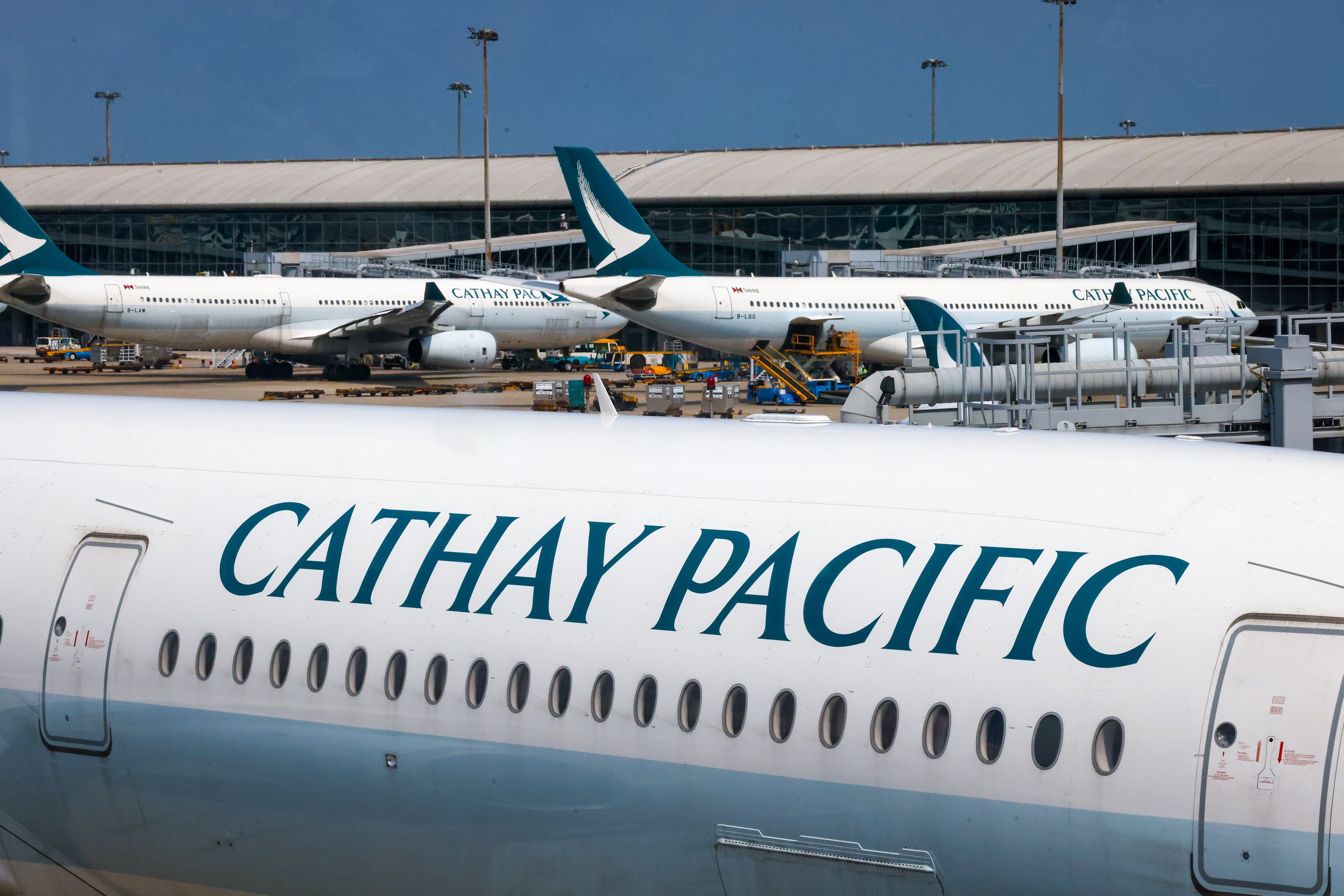
Cathay Pacific’s 40% Capacity Surge in China Summer Flights 2025
Hong Kong airline expands to 300 weekly mainland China flights targeting economic hubs, backed by HK$100B modernization plan and global route network growth.

As global air travel continues its post-pandemic recovery, Cathay Pacific has positioned itself at the forefront of Asia’s aviation resurgence. The Hong Kong-based carrier recently announced plans to operate nearly 300 weekly return flights to 20 Chinese destinations during the 2025 summer season, marking a 40% capacity increase compared to 2024. This expansion underscores Cathay’s dual role as both a regional connector and global aviation player.
The move comes as China’s domestic travel market shows robust growth, with IATA reporting a 21.8% year-on-year passenger demand increase in Asia-Pacific for January 2025. For Hong Kong, this expansion represents more than just route development – it’s a strategic play to reinforce its position as an international aviation hub while strengthening economic ties with mainland China.
Cathay’s summer schedule reveals a calculated focus on China’s key economic zones. The Beijing-Tianjin-Hebei megacity cluster and Yangtze River Delta region will receive enhanced connectivity, with Beijing seeing 56 weekly return flights split between Capital and Daxing airports. Shanghai’s dual airports will collectively handle 67 weekly Cathay flights, including 11 weekly services to Hongqiao – a rare international route from this downtown facility.
The carrier is deploying a tiered approach to regional connectivity:
“Our expanded mainland network isn’t just about volume – it’s about creating strategic links between China’s innovation hubs and global markets,” says Lavinia Lau, Cathay’s Chief Customer Officer.
While mainland China forms the core of this expansion, Cathay is simultaneously extending its global reach. The group plans to serve over 100 destinations worldwide by 2025’s end, adding 13 new routes including Dallas, Rome, and Brussels. This dual-axis growth strategy positions Hong Kong as a bridge between China’s economic powerhouses and key Western markets.
The airline’s HK$100 billion investment plan (2025-2032) supports this expansion, funding:
Scaling operations at this pace presents both hurdles and advantages. Cathay plans to increase mainland Chinese staff from 3,000 to 4,000 by 2025’s end, particularly recruiting flight crews fluent in Mandarin and Cantonese. This localization strategy aims to improve service quality for mainland travelers who now constitute 35% of Cathay’s customer base.
The Urumqi route launch (4 weekly flights from April 28) exemplifies Cathay’s niche market strategy. As the first international carrier to offer direct Hong Kong-Xinjiang service, Cathay taps into both business traffic from China’s western development initiatives and adventure tourism demand. Cathay’s expansion arrives as Hong Kong International Airport completes its third runway system, boosting annual capacity to 120 million passengers. Aviation analysts predict the enhanced mainland connectivity could contribute HK$23 billion annually to Hong Kong’s economy through tourism and business travel.
The airline’s cargo division stands to benefit significantly, with increased belly capacity on mainland routes supporting Hong Kong’s position as the world’s busiest air cargo hub. Recent partnerships with SF Express and JD Logistics create integrated supply chain solutions leveraging the expanded passenger network.
“Every new mainland route strengthens Hong Kong’s relevance in the Greater Bay Area ecosystem,” notes aviation analyst Li Wei. “Cathay isn’t just moving passengers – they’re facilitating capital flows and technological exchange.”
Cathay Pacific’s summer expansion represents a strategic inflection point for Asian aviation. By doubling down on mainland China connections while extending global reach, the carrier positions Hong Kong as the Asia-Pacific’s premier transit hub. The 40% capacity increase reflects confidence in sustained travel demand despite economic headwinds.
Looking ahead, Cathay’s success hinges on balancing operational scale with service quality. As the group implements its HK$100 billion modernization plan, industry watchers will monitor how effectively it integrates sustainable practices and digital innovation. With mainland China’s aviation market projected to surpass the US by 2030, Cathay’s current investments may prove prescient in capturing Asia’s next growth wave.
How many destinations is Cathay Pacific adding in 2025? What’s driving Cathay’s focus on mainland China? How will this affect flight prices? Sources:
Cathay Pacific’s Strategic Summer Expansion in China
Focus on Strategic Economic Regions
Global Network Synergy
Operational Challenges and Opportunities
Economic Implications and Future Outlook
Conclusion
FAQ
Cathay will add 13 new global destinations including Dallas and Rome, plus Urumqi as its 20th mainland Chinese destination.
Post-pandemic recovery, Hong Kong’s hub strategy, and China’s projected 8.2% annual growth in outbound travel through 2030.
Increased capacity typically stabilizes fares, but premium cabin demand on key routes may maintain pricing power.
Travel Radar,
Cathay Pacific News,
China Daily



Aircraft Orders & Deliveries
BOC Aviation Renews $3.5B Credit Facility with Bank of China to 2031
BOC Aviation extends its $3.5 billion revolving credit facility with Bank of China to 2031, securing liquidity for aircraft investments and growth.
This article is based on an official press release from BOC Aviation.
BOC Aviation Limited has officially announced the renewal of its US$3.5 billion unsecured revolving credit facility (RCF) with its majority shareholder, the Bank of China. Confirmed on February 16, 2026, the transaction extends the maturity of the facility to February 13, 2031, providing the Singapore-based lessor with a five-year horizon of secured liquidity.
The renewal maintains the facility’s total value at the same level established during its 2020 expansion. According to the company, this move is designed to bolster financial flexibility and ensure consistent access to capital for aircraft investments, regardless of broader market cycles. The agreement underscores the continued financial backing BOC Aviation receives from its parent company, a critical differentiator in the competitive aircraft leasing sector.
The renewed agreement is an unsecured revolving credit facility, a structure that allows BOC Aviation to draw down, repay, and re-borrow funds as needed up to the US$3.5 billion limit. By extending the maturity date to 2031, the lessor secures a long-term funding runway to support its growth strategy.
Steven Townend, Chief Executive Officer and Managing Director of BOC Aviation, emphasized the strategic importance of this renewal in a statement released by the company. He highlighted the alignment between the lessor and its parent organization.
“This RCF extension reflects the confidence that Bank of China has in the future of our business and underscores the depth of our relationship with our major shareholder. The facility strengthens our financial flexibility and ensures our access to ample liquidity to support our aircraft investments across the cycle.”
, Steven Townend, CEO of BOC Aviation
The credit facility has grown significantly alongside BOC Aviation’s fleet over the last two decades. The company provided a timeline of the facility’s evolution, illustrating the increasing scale of support from the Bank of China:
This liquidity event occurs against a backdrop of significant operational activity for the lessor. As of December 31, 2025, BOC Aviation reported a total portfolio of 815 aircraft and engines, including owned, managed, and ordered assets. The company’s reach extends to 87 airlines across 46 countries and regions.
Data released regarding the full year 2025 indicates robust activity, with the company taking delivery of 51 new aircraft and executing a record 333 transactions. These transactions included 160 aircraft purchase commitments, signaling an aggressive growth posture that necessitates substantial available capital. In addition to the RCF renewal, BOC Aviation has recently moved to diversify its funding sources. In early February 2026, the company successfully priced US$500 million in senior unsecured notes. The combination of these notes and the renewed RCF provides a multi-layered capital structure to fund future acquisitions.
The renewal of this facility highlights a structural advantage for BOC Aviation compared to independent lessors. In a high-interest-rate environment or during periods of market volatility, the cost of funds is a primary determinant of a lessor’s profitability. The direct backing of a major state-owned bank allows BOC Aviation to secure large-scale liquidity that might be more expensive or difficult to arrange for competitors without similar parentage.
Furthermore, with supply chain constraints continuing to affect Airbus and Boeing deliveries in 2026, lessors with ready cash are better positioned to execute sale-and-leaseback (SLB) transactions with airlines desperate for liquidity. By locking in US$3.5 billion in revolving credit through 2031, BOC Aviation is effectively positioning itself to act as a liquidity provider to the airline industry, potentially acquiring assets at attractive valuations while manufacturers struggle to meet delivery targets.

BOC Aviation Secures US$3.5 Billion Facility Renewal with Bank of China
Transaction Details and Management Commentary
Historical Evolution of the Facility
Operational Context and Financial Position
AirPro News Analysis
Sources
Photo Credit: BOC Aviation
Commercial Aviation
American Airlines Named Official Airline of Women in Aviation 2026 Conference
American Airlines becomes the first Official Airline of the 2026 Women in Aviation International conference, funding scholarships and sponsoring key events.
This article is based on an official press release from American Airlines.
As American Airlines prepares to celebrate its centennial anniversary in 2026, the carrier has announced a historic partnership with Women in Aviation International (WAI). According to an official announcement from the company, American Airlines has been named the first-ever “Official Airline” of the WAI annual conference.
The 37th Annual WAI Conference is scheduled to take place from March 19–21, 2026, at the Gaylord Texan Resort & Convention Center in Grapevine, Texas. The location is strategically significant, situated near the airline’s global headquarters in Fort Worth. This collaboration marks a shift in the airline’s engagement with the nonprofit, moving from general support to a titular sponsorship role during its 100th year of operation.
The partnership is framed as a central component of American Airlines’ 100th-anniversary celebrations. While the airline reflects on a century of connecting locations, this initiative highlights a forward-looking focus on workforce development and inclusion. By securing the “Official Airline” title, American aims to leverage its “hometown advantage” in the Dallas-Fort Worth metroplex to recruit and inspire the next generation of aviation professionals.
Cole Brown, Chief People Officer at American Airlines, emphasized the strategic importance of this alliance in a statement released by the company:
“At American, we believe building a culture where women and girls are represented, empowered and able to thrive as leaders is vital to the future of our industry. As we celebrate our centennial year, we’re proud to partner with WAI… to honor our legacy of innovation and reinforce our commitment to developing the future of the aviation workforce.”
Beyond the titular sponsorship, the press release details specific financial commitments aimed at reducing barriers to entry for women in aviation. American Airlines confirmed it will fund a total of eight scholarships for conference attendees. These awards are designed to address specific technical shortages in the industry.
According to the partnership details, the scholarships include:
In addition to direct financial aid, the airline will sponsor key events during the conference:
While the partnership represents a significant public relations milestone, it also highlights the ongoing disparity in gender representation within the cockpit. Industry data indicates that the global average for female airline pilots remains between 4% and 6%. American Airlines currently reports that approximately 5% of its pilots are women.
Comparatively, United Airlines leads major U.S. carriers with approximately 7.4% female pilot representation, while Delta Air Lines sits at roughly 5.3% and Southwest Airlines at 4.1%. The scholarships funded by this partnership target the “pipeline gap.” While women make up less than 20% of the total aviation workforce, they currently represent approximately 15% of student pilots. Initiatives like the WAI conference are critical for converting these students into career professionals. Lynda Coffman, CEO of Women in Aviation International, noted the significance of the airline’s involvement:
“As the Official Airline of this year’s annual conference, American has an important role in welcoming our estimated 5,000 WAI2026 attendees to the Dallas-Fort Worth metroplex.”
Historically, American Airlines has played a role in breaking gender barriers; in 1973, it became the first major U.S. commercial carrier to hire a female pilot, Bonnie Tiburzi Caputo. This new partnership appears designed to reinforce that legacy as the carrier enters its second century.

American Airlines Becomes First “Official Airline” of Women in Aviation International Conference
A Centennial Commitment to Diversity
Scholarships and Career Initiatives
Financial Support Breakdown
Event Sponsorships
AirPro News Analysis: The Industry Context
Frequently Asked Questions
Sources
Photo Credit: American Airlines
Aircraft Orders & Deliveries
Air Astana Orders 15 Boeing 787-9 Dreamliners to Expand US Routes
Air Astana finalizes $7B order for 15 Boeing 787-9 Dreamliners to modernize its fleet and enable direct flights to North America starting 2026.
This article is based on an official press release from Boeing and Air Astana.
On February 17, 2026, Air Astana JSC, the flag carrier of Kazakhstan, officially finalized a major agreement with Boeing for up to 15 Boeing 787-9 Dreamliner aircraft. The deal, announced in Seattle, marks the largest single aircraft purchase in the airline’s history and signals a pivotal shift in its long-haul strategy. Valued at approximately $7 billion at list prices, the agreement is designed to modernize the carrier’s widebody fleet and facilitate direct operations to North America.
The acquisition comes at a critical transition point for the Airlines, coinciding with a leadership change and following its recent IPO. According to the official announcement, the new fleet will replace aging Boeing 767s and provide the range necessary to navigate complex geopolitical airspace restrictions while connecting Central Asia to the United States.
The agreement creates a long-term pipeline for fleet renewal. According to details released regarding the Contracts, the order for 15 aircraft is structured in three tiers:
While the newly purchased jets are scheduled for delivery between 2032 and 2035, Air Astana will begin operating the Dreamliner much sooner. Through a separate agreement with Air Lease Corporation (ALC), three leased Boeing 787-9s are expected to join the fleet in the first quarter of 2026. These leased units will allow the carrier to begin pilot training and route expansion immediately, bridging the gap until the direct orders arrive.
The selection of the 787-9 variant represents a significant upgrade in capacity and efficiency over Air Astana’s current widebody workhorse, the Boeing 767-300ER. Data provided in the announcement indicates the new Dreamliners will feature a two-class configuration with 303 seats, a substantial increase from the 223 seats offered on the 767s.
In a notable strategic pivot, Air Astana has selected General Electric GEnx-1B engines to power the new fleet, moving away from a 2012 intention to utilize Rolls-Royce Trent 1000 engines. The airline cites the 787-9’s superior fuel efficiency and range, approximately 7,530 nautical miles, as critical factors in the decision.
“Boeing airplanes have been integral to Air Astana’s operations from the beginning. We are proud that the 787 Dreamliner will support Central Asia’s growing importance in global aviation.”
, Paul Righi, VP of Commercial Sales (Eurasia), Boeing
A primary driver behind this investment is the airline’s ambition to launch non-stop service from Kazakhstan to New York (JFK). This route has long been a strategic goal but faces significant logistical hurdles due to the closure of Russian airspace following geopolitical sanctions. The current geopolitical climate necessitates a southern route over the Caspian Sea, Turkey, and Europe, adding considerable distance to the flight path. The extended range of the Boeing 787-9 is essential to making this detour commercially and operationally viable, allowing Air Astana to bypass Russian airspace without sacrificing payload or requiring technical stops.
The timing of this order suggests Air Astana is aggressively positioning itself as the dominant connector in the Central Asian market, outpacing regional competitors like Uzbekistan Airways. By securing the 787-9, the airline is not only solving the immediate problem of airspace restrictions but is also future-proofing its fleet against fuel price volatility. The shift to GE engines likely reflects a desire for reliability on these ultra-long-haul routes, where engine performance over remote regions is paramount.
The finalization of this order serves as a capstone achievement for outgoing CEO Peter Foster, who is set to retire in March 2026. Foster has led the airline through its recent IPO and this historic fleet renewal. He will be succeeded by current CFO Ibrahim Canliel, who will oversee the financial integration of these assets.
“The 787-9’s advanced technology and efficiency will allow us to connect Kazakhstan to new markets, including North America, with a superior passenger experience.”
, Peter Foster, Outgoing CEO, Air Astana
Sources: Boeing Mediaroom

Air Astana Finalizes Historic Orders for 15 Boeing 787-9 Dreamliners to Target US Routes
Deal Structure and Delivery Timeline
Technical Specifications and Fleet Modernization
Strategic Expansion: The “Holy Grail” of New York
AirPro News Analysis
Leadership Transition
Sources
Photo Credit: Boeing
-

 Regulations & Safety4 days ago
Four Killed in Tennessee-Registered Plane Crash Near Steamboat Springs
-

 Regulations & Safety3 days ago
Jet2 Flight Diverts to Brussels After Violent Midair Altercation
-

 Business Aviation5 days ago
Bombardier Exceeds 2025 Targets and Projects $10B Revenue in 2026
-

 Business Aviation6 days ago
Bombardier Secures Major Challenger 3500 Order from Vista Global
-

 Regulations & Safety5 days ago
Arik Air Boeing 737-700 Diverts to Benin After Engine Failure