
Commercial Aviation
ACG & United Airlines: $800M 737-9 MAX Deal Boosts Sustainability
Aviation Capital Group’s strategic leaseback agreement with United Airlines delivers fuel-efficient Boeing jets, cutting emissions and costs while advancing blockchain-powered fleet expansion.


Aviation Capital Group’s Strategic Partnership with United Airlines
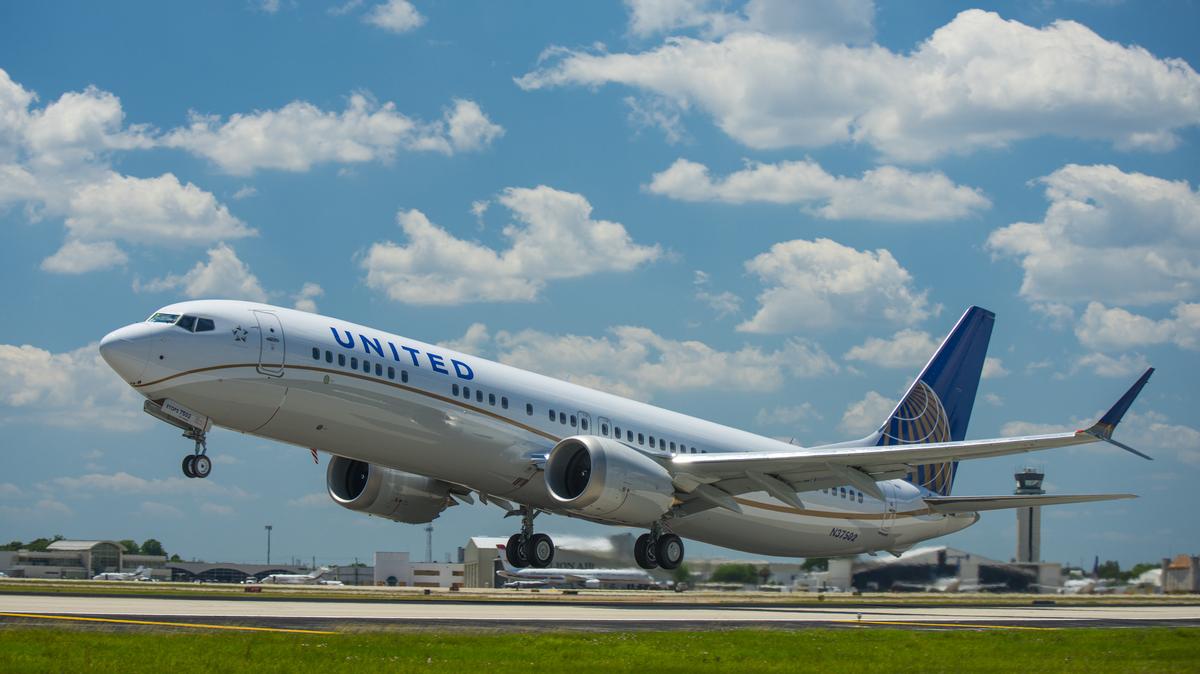
The aviation leasing sector plays a critical role in global air travel, enabling airlines to modernize fleets without massive capital expenditures. Aviation Capital Group (ACG), a Tokyo Century Corporation subsidiary, recently completed delivery of seven Boeing 737-9 MAX aircraft to United Airlines through sale-leaseback transactions. This $800 million deal underscores ACG’s position as a key player in aircraft asset management while supporting United’s sustainability goals through next-generation aircraft technology.
These deliveries occurred amid growing industry emphasis on fuel efficiency and carbon reduction. The Boeing 737-9 MAX’s LEAP-1B engines offer 15% better fuel efficiency than previous models, aligning with International Air Transport Association targets for net-zero emissions by 2050. ACG’s ability to complete all seven deliveries in under eight months demonstrates operational efficiency crucial in post-pandemic aviation recovery.
Accelerating Fleet Modernization Through Partnership
The completed deliveries mark United’s largest single-lease agreement for 737-9 MAX aircraft. Sale-leaseback arrangements allow airlines to convert owned assets into liquidity while maintaining operational control – a strategy United employed to fund 35% of its 2024 fleet expansion. ACG’s structured financing solutions enabled United to deploy these fuel-efficient jets across key routes like San Francisco-Honolulu, where 14% fuel savings translate to $2.1 million annual cost reduction per aircraft.
ACG’s technical teams worked closely with Boeing to implement cabin configuration upgrades during production, including United’s signature Polaris business class seats. This customization capability differentiates ACG from competitors, allowing lessees to maintain brand consistency across fleets. The lessor’s global network of maintenance partners also provides United with turnkey solutions for technical support across 45 countries.
“Our collaboration with ACG goes beyond transactions – it’s about building operational resilience,” said Pamela Hendry, United’s VP of Treasury. “The 737-9 MAX’s performance metrics already show 18% lower emissions on transcontinental routes compared to previous generation aircraft.”
Financial Engineering in Aircraft Leasing
ACG’s recent $800 million senior unsecured notes offering demonstrates investor confidence in aviation assets. The dual-tranche structure ($500M due 2030, $300M due 2027) achieved 2.1x oversubscription, reflecting strong market demand. Proceeds are earmarked for new acquisitions, with ACG planning to expand its managed portfolio to 600 aircraft by 2026.
The company’s asset-backed securities model proves particularly effective in volatile fuel markets. By maintaining an average lease term of 8.2 years across its portfolio, ACG ensures stable cash flows while offering airlines flexibility through early buyout options. This balanced approach helped achieve 94% fleet utilization in 2024 despite global economic uncertainties.
Environmental and Operational Impacts
Fuel Efficiency Breakthroughs
The LEAP-1B engines powering United’s new fleet incorporate advanced ceramic matrix composites that withstand higher combustion temperatures. This technology improves fuel burn by 6% compared to earlier MAX variants, while reducing nitrous oxide emissions by 40%. ACG estimates these aircraft will save 28,000 metric tons of CO2 annually across the seven-aircraft fleet – equivalent to removing 6,000 cars from roads.
United has deployed these aircraft on high-density routes where efficiency gains matter most. Early operational data shows 12% lower maintenance costs compared to A321neos on similar routes, partly due to Boeing’s new predictive maintenance interface that alerts technicians to potential issues 30% earlier than previous systems.
Industry-Wide Sustainability Push
ACG’s environmental stewardship extends beyond fuel efficiency. The lessor recently partnered with CarbonCure Technologies to offset 15% of its managed fleet emissions through concrete mineralization projects. This initiative aligns with the Aviation Climate Taskforce’s recommendations for non-fuel emission reductions.
“True sustainability requires multidimensional solutions,” notes ACG’s Alan Mangels. “While efficient aircraft form the foundation, we’re investing in sustainable aviation fuel partnerships and carbon capture technologies to address the full emissions lifecycle.”
Future of Aircraft Financing
As airlines navigate post-pandemic recovery, ACG’s hybrid financing models are gaining traction. The company recently piloted a carbon-credit-backed leasing structure where carriers earn offset credits for exceeding efficiency targets. Early adopters like United can convert these credits into lease payment reductions or reinvestment into SAF infrastructure.
Looking ahead, ACG plans to leverage blockchain technology for asset tokenization. This innovation could enable fractional aircraft ownership, opening aviation investment to smaller institutional players while improving liquidity in secondary markets. The first pilot program is slated for Q3 2025 with Singapore-based partners.
Conclusion
The ACG-United partnership exemplifies how strategic aircraft leasing supports both operational and environmental goals. By combining financial innovation with technological advancement, lessors play a pivotal role in aviation’s sustainable transformation. The successful delivery of seven 737-9 MAX aircraft in record time demonstrates the efficiency of modern asset management models.
As the industry evolves, expect increased integration of sustainability metrics into leasing agreements. ACG’s planned expansion into blockchain and carbon markets suggests aircraft lessors will increasingly function as comprehensive sustainability partners rather than mere financiers. These developments position aviation leasing as a key driver of the sector’s net-zero ambitions.
FAQ
Question: What is Aviation Capital Group’s role in aircraft leasing?
Answer: ACG specializes in purchasing aircraft from manufacturers and leasing them to airlines through customized financial agreements, helping carriers expand fleets without major capital expenditures.
Question: How does the Boeing 737-9 MAX improve fuel efficiency?
Answer: The aircraft uses advanced LEAP-1B engines with ceramic composite materials, achieving 15% better fuel efficiency and 40% lower emissions than previous generation planes.
Question: What are sale-leaseback transactions?
Answer: Airlines sell owned aircraft to lessors like ACG then lease them back, converting assets into operating capital while maintaining usage rights.
Sources:
Aviation Capital Group,
Business Wire,
Yahoo Finance
Photo Credit: https://airpronews.com/wp-content/uploads/2025/03/united-737max-9-21200xx4898-2755-0-255.jpg



Commercial Aviation
Airbus Cancels AirAsia X Order for 15 A330-900 Aircraft
Airbus confirms mutual cancellation of 15 A330-900s with AirAsia X as the group shifts to A220-300 and A321XLR narrowbodies.

This article summarizes reporting by The Star.
Airbus SE has officially removed 15 A330-900 aircraft from its backlog following a mutual agreement with Malaysia-based AirAsia X Berhad to cancel the outstanding order. The cancellation, confirmed by the manufacturer on June 17, 2026, marks a definitive end to the long-haul low-cost carrier’s previous widebody expansion strategy.
According to reporting by The Star, an Airbus spokesperson confirmed the mutual cancellation in a statement to the Malaysian National News Agency (Bernama). The adjustment was formally reflected in the European manufacturer’s May 2026 orders and deliveries data. AirAsia X declined to provide an official comment regarding the cancellation.
Strategic shift toward narrowbody operations
The cancellation of the A330-900 order aligns with a broader fleet restructuring across the AirAsia Group. The company is pivoting away from widebody aircraft in favor of long-range narrowbodies and smaller regional jets to serve its future network requirements.
In May 2026, AirAsia placed a firm order for 150 Airbus A220-300 aircraft. The group also recently committed to 50 Airbus A321-200NY(XLR) aircraft, according to ch-aviation. These acquisitions indicate a preference for lower-capacity, longer-range airframes to optimize route economics.
Network adjustments and delayed hub launch
Alongside the fleet changes, AirAsia X is modifying its near-term network expansion plans. The carrier recently postponed the launch of its planned hub at Bahrain International Airport (BAH).
The airline had intended to utilize the Bahrain hub for fifth-freedom flights connecting Kuala Lumpur International Airport (KUL) to London Gatwick Airport (LGW) starting in June 2026. Due to concerns regarding the ongoing conflict in the Middle East, ch-aviation reports that the launch has been delayed until August or September 2026.
AirPro News analysis
We view the formal cancellation of the A330-900 order as the final step in AirAsia X’s post-pandemic restructuring. By abandoning the high-capacity widebody model in favor of the A321XLR and A220-300, the airline group is prioritizing flexibility and lower trip costs over sheer passenger volume. The A321XLR will allow AirAsia X to maintain its long-haul low-cost model on thinner routes that could not profitably sustain an A330-900. Concurrently, the delayed Bahrain hub launch demonstrates a cautious approach to international expansion amid geopolitical volatility.
Sources: The Star, Airbus Orders and Deliveries, ch-aviation, Airbus Press Release
Photo Credit: Airbus
Aircraft Orders & Deliveries
Airbus and Lufthansa Mark 50 Years at ILA Berlin 2026
Airbus and Lufthansa signed an A220 component services deal at ILA Berlin, marking 50 years of partnership and a 700th delivery milestone.

Airbus SE and Deutsche Lufthansa AG formalized a new component services agreement for the airline’s Airbus A220 fleet during the ILA Berlin Air Show on June 10, 2026, marking the 50th anniversary of their commercial partnership.
The agreement, detailed in a Lufthansa Group press release, coincides with the European manufacturers preparing to deliver its 700th aircraft to the German airline group later this year. The half-century relationship began in 1976 with the delivery of Lufthansa’s first Airbus A300, establishing a foundation that has seen the carrier take delivery of more Airbus Commercial-Aircraft than any other operator globally.
Fleet expansion and the 700th delivery milestone
The upcoming Delivery of the 700th Airbus aircraft, scheduled for late 2026, highlights a sustained period of fleet renewal for the Lufthansa Group. In May 2026, the operator expanded its long-haul commitments by placing a firm Orders for 10 additional Airbus A350-900 aircraft.
This recent acquisition brings Lufthansa’s total A350 order book to 75 airframes, which includes the upcoming A350-1000 variant. The Airlines currently operates 43 A350-900s across its global network.
“Today, we are working together towards the delivery of the 700th aircraft for the Lufthansa Group which is scheduled for later this year. This major milestone is just one example of how Airbus and Lufthansa jointly worked on making aviation one of the key industries for Germany,” said Lars Wagner, CEO of Commercial Aircraft at Airbus.
Strategic agreements and ILA Berlin presence
Beyond the ceremonial milestones at the ILA Berlin Air Show, the two aviation companies signed new strategic cooperation agreements. Central to these is a comprehensive component services contract covering Lufthansa’s entire Airbus A220 fleet, ensuring long-term maintenance and parts support for the narrowbody aircraft. The partners also reaffirmed joint commitments to sustainable aviation initiatives, building on previous collaborations such as the deployment of the drag-reducing SharkSkin aircraft coating.
Lufthansa Group CEO Carsten Spohr emphasized the historical depth of the collaboration, noting the airline’s role as a launch customer for numerous Airbus models developed in Toulouse and Hamburg.
“We intend to build on this foundation together to further advance aircraft technology and expand Europe’s leading role in the aviation sector,” Spohr stated.
The anniversary was visually commemorated at the air show with a Lufthansa Airbus A320neo, registered D-AING, featuring a special 100th-anniversary livery. The aircraft displays an oversized crane logo on a blue fuselage, celebrating the centennial of the original Lufthansa airline’s founding.
AirPro News analysis
We view the 50-year milestone as more than a ceremonial marker; it underscores the deeply intertwined industrial strategies of Airbus and the Lufthansa Group. By securing a comprehensive component services agreement for the A220 fleet, Airbus continues to expand its footprint in the lucrative aftermarket sector, ensuring revenue streams that extend decades beyond the initial airframe delivery. Lufthansa’s consistent role as a launch customer and its steady stream of widebody orders, including the recent top-up of A350-900s, provides Airbus with critical production stability in the twin-aisle market. The relationship remains a foundational pillar for European aerospace manufacturing.
Sources: Lufthansa Group
Photo Credit: Lufthansa Group
Commercial Aviation
Riyadh Air Launches First Domestic Flights to Jeddah
Riyadh Air began Riyadh-Jeddah domestic service on June 14, 2026, using Boeing 787-9 aircraft on one of the world’s busiest routes.

Riyadh Air officially commenced its first domestic operations on June 14, 2026, launching service between King Khalid International Airport (RUH) and King Abdulaziz International Airport (JED) with its Boeing 787-9 Dreamliner fleet.
The inaugural flight, designated RX0011, departed the Saudi capital at 9:00 AM local time and arrived in Jeddah at 10:50 AM. In a press release issued to mark the occasion, the carrier framed the new route as a critical component of Saudi Arabia’s National Transport and Logistics Strategy and the broader Vision 2030 initiative, catering to business, tourism, and religious travel.
Schedule ramp-up and market demand
The airline is initiating the RUH-JED corridor with two daily flights. According to schedule data reported by Arabian Business, Riyadh Air will increase this frequency to three daily flights on June 18, 2026, and expand to four daily flights by July 2, 2026.
The capacity addition enters one of the most heavily trafficked domestic aviation markets in the world. In 2025, the Riyadh-Jeddah route recorded 9.8 million seats, ranking it as the fifth busiest domestic corridor globally.
Riyadh Air Chief Executive Officer Tony Douglas highlighted the strategic importance of the corridor for the new national carrier.
“The launch of our new service to Jeddah marks another historic moment in our journey to increase connectivity to Riyadh. This route has been carefully selected to serve a key market for business and cultural travel, aligning with our ambition to become a global airline and a significant contributor to Vision 2030.”
Network integration and hub strategy
The domestic launch follows closely behind Riyadh Air’s inaugural international commercial flight to London Heathrow Airport (LHR). Industry publication LARA reported that the new domestic service is designed to position Riyadh as a primary transport hub, facilitating connections for passengers traveling from Jeddah to planned global destinations including Dubai, Cairo, Madrid, and Manchester.
The expansion requires close coordination with airport operators. Eng. Mazen bin Mohammed Johar, Chief Executive Officer of Jeddah Airports Company (JEDCO), stated that the inaugural flights reflect an advanced level of collaboration across the Saudi aviation sector. He noted the service strengthens air connectivity between the two cities while expanding travel options for passengers.
AirPro News analysis
We view Riyadh Air’s deployment of widebody Boeing 787-9 Dreamliner aircraft on a domestic route as a clear indicator of the sheer volume of demand between Riyadh and Jeddah. While operating twin-aisle aircraft on short-haul domestic sectors is relatively uncommon globally, the 9.8 million seats recorded on this route in 2025 justify the high-capacity gauge. This strategy allows the carrier to maximize slot utility at both RUH and JED while rapidly building the domestic feed necessary to sustain its expanding international long-haul network.
Sources: Riyadh Air
Photo Credit: Riyadh Air
-

 Technology & Innovation6 days ago
Airbus Vision Landing Application Enables AI Autoland
-

 Defense & Military5 days ago
Boeing Withdraws T-7A Red Hawk from Navy UJTS Competition
-

 Regulations & Safety3 days ago
Missouri Skydive Plane Crash Kills 12 at Butler Airport
-

 Commercial Aviation5 days ago
Airbus A350-1000ULR EASA Certification Campaign Begins
-

 Regulations & Safety5 days ago
Turkish Airlines 777-300ER Wing Strike at Antalya Airport