Commercial Aviation
ACG & United Airlines: $800M 737-9 MAX Deal Boosts Sustainability
Aviation Capital Group’s strategic leaseback agreement with United Airlines delivers fuel-efficient Boeing jets, cutting emissions and costs while advancing blockchain-powered fleet expansion.


Aviation Capital Group’s Strategic Partnership with United Airlines
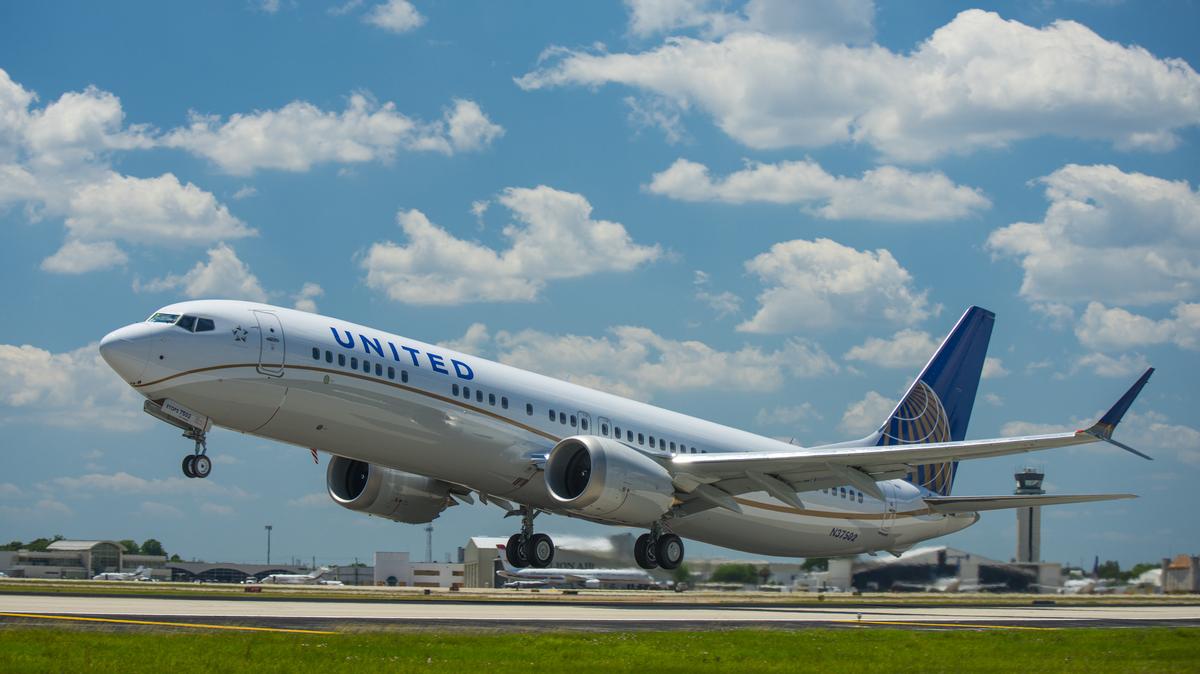
The aviation leasing sector plays a critical role in global air travel, enabling airlines to modernize fleets without massive capital expenditures. Aviation Capital Group (ACG), a Tokyo Century Corporation subsidiary, recently completed delivery of seven Boeing 737-9 MAX aircraft to United Airlines through sale-leaseback transactions. This $800 million deal underscores ACG’s position as a key player in aircraft asset management while supporting United’s sustainability goals through next-generation aircraft technology.
These deliveries occurred amid growing industry emphasis on fuel efficiency and carbon reduction. The Boeing 737-9 MAX’s LEAP-1B engines offer 15% better fuel efficiency than previous models, aligning with International Air Transport Association targets for net-zero emissions by 2050. ACG’s ability to complete all seven deliveries in under eight months demonstrates operational efficiency crucial in post-pandemic aviation recovery.
Accelerating Fleet Modernization Through Partnership
The completed deliveries mark United’s largest single-lease agreement for 737-9 MAX aircraft. Sale-leaseback arrangements allow airlines to convert owned assets into liquidity while maintaining operational control – a strategy United employed to fund 35% of its 2024 fleet expansion. ACG’s structured financing solutions enabled United to deploy these fuel-efficient jets across key routes like San Francisco-Honolulu, where 14% fuel savings translate to $2.1 million annual cost reduction per aircraft.
ACG’s technical teams worked closely with Boeing to implement cabin configuration upgrades during production, including United’s signature Polaris business class seats. This customization capability differentiates ACG from competitors, allowing lessees to maintain brand consistency across fleets. The lessor’s global network of maintenance partners also provides United with turnkey solutions for technical support across 45 countries.
“Our collaboration with ACG goes beyond transactions – it’s about building operational resilience,” said Pamela Hendry, United’s VP of Treasury. “The 737-9 MAX’s performance metrics already show 18% lower emissions on transcontinental routes compared to previous generation aircraft.”
Financial Engineering in Aircraft Leasing
ACG’s recent $800 million senior unsecured notes offering demonstrates investor confidence in aviation assets. The dual-tranche structure ($500M due 2030, $300M due 2027) achieved 2.1x oversubscription, reflecting strong market demand. Proceeds are earmarked for new acquisitions, with ACG planning to expand its managed portfolio to 600 aircraft by 2026.
The company’s asset-backed securities model proves particularly effective in volatile fuel markets. By maintaining an average lease term of 8.2 years across its portfolio, ACG ensures stable cash flows while offering airlines flexibility through early buyout options. This balanced approach helped achieve 94% fleet utilization in 2024 despite global economic uncertainties.
Environmental and Operational Impacts
Fuel Efficiency Breakthroughs
The LEAP-1B engines powering United’s new fleet incorporate advanced ceramic matrix composites that withstand higher combustion temperatures. This technology improves fuel burn by 6% compared to earlier MAX variants, while reducing nitrous oxide emissions by 40%. ACG estimates these aircraft will save 28,000 metric tons of CO2 annually across the seven-aircraft fleet – equivalent to removing 6,000 cars from roads.
United has deployed these aircraft on high-density routes where efficiency gains matter most. Early operational data shows 12% lower maintenance costs compared to A321neos on similar routes, partly due to Boeing’s new predictive maintenance interface that alerts technicians to potential issues 30% earlier than previous systems.
Industry-Wide Sustainability Push
ACG’s environmental stewardship extends beyond fuel efficiency. The lessor recently partnered with CarbonCure Technologies to offset 15% of its managed fleet emissions through concrete mineralization projects. This initiative aligns with the Aviation Climate Taskforce’s recommendations for non-fuel emission reductions.
“True sustainability requires multidimensional solutions,” notes ACG’s Alan Mangels. “While efficient aircraft form the foundation, we’re investing in sustainable aviation fuel partnerships and carbon capture technologies to address the full emissions lifecycle.”
Future of Aircraft Financing
As airlines navigate post-pandemic recovery, ACG’s hybrid financing models are gaining traction. The company recently piloted a carbon-credit-backed leasing structure where carriers earn offset credits for exceeding efficiency targets. Early adopters like United can convert these credits into lease payment reductions or reinvestment into SAF infrastructure.
Looking ahead, ACG plans to leverage blockchain technology for asset tokenization. This innovation could enable fractional aircraft ownership, opening aviation investment to smaller institutional players while improving liquidity in secondary markets. The first pilot program is slated for Q3 2025 with Singapore-based partners.
Conclusion
The ACG-United partnership exemplifies how strategic aircraft leasing supports both operational and environmental goals. By combining financial innovation with technological advancement, lessors play a pivotal role in aviation’s sustainable transformation. The successful delivery of seven 737-9 MAX aircraft in record time demonstrates the efficiency of modern asset management models.
As the industry evolves, expect increased integration of sustainability metrics into leasing agreements. ACG’s planned expansion into blockchain and carbon markets suggests aircraft lessors will increasingly function as comprehensive sustainability partners rather than mere financiers. These developments position aviation leasing as a key driver of the sector’s net-zero ambitions.
FAQ
Question: What is Aviation Capital Group’s role in aircraft leasing?
Answer: ACG specializes in purchasing aircraft from manufacturers and leasing them to airlines through customized financial agreements, helping carriers expand fleets without major capital expenditures.
Question: How does the Boeing 737-9 MAX improve fuel efficiency?
Answer: The aircraft uses advanced LEAP-1B engines with ceramic composite materials, achieving 15% better fuel efficiency and 40% lower emissions than previous generation planes.
Question: What are sale-leaseback transactions?
Answer: Airlines sell owned aircraft to lessors like ACG then lease them back, converting assets into operating capital while maintaining usage rights.
Sources:
Aviation Capital Group,
Business Wire,
Yahoo Finance
Photo Credit: https://airpronews.com/wp-content/uploads/2025/03/united-737max-9-21200xx4898-2755-0-255.jpg