
Training & Certification
Italy’s M-345 Trainer Enhances Military Pilot Training Efficiency
Italian Air Force adopts Leonardo M-345 jet trainer with digital avionics and embedded simulation, replacing MB-339A to modernize cost-effective pilot training.

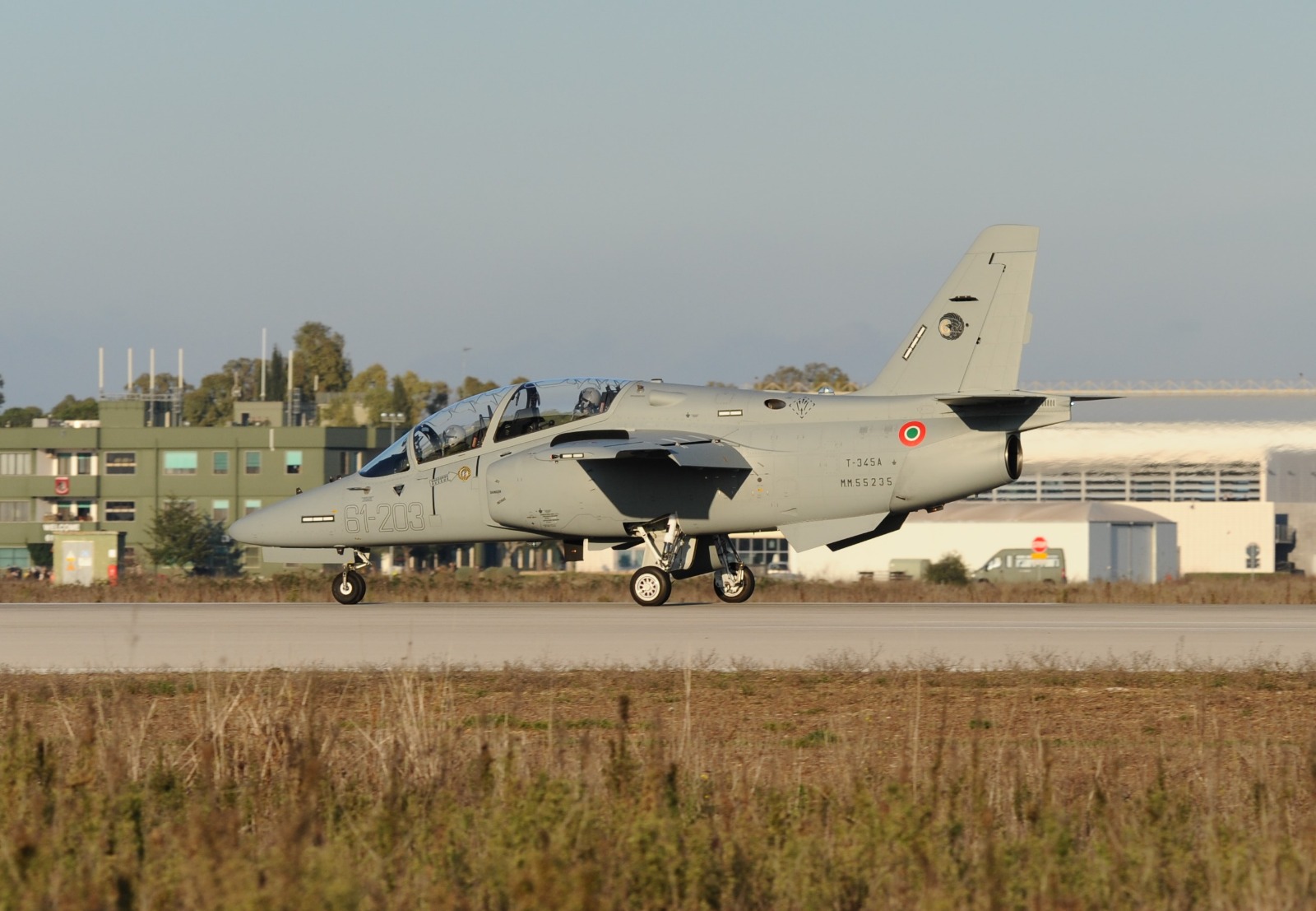
Italy’s M-345 Trainer Enters Service: A New Era for Military Pilot Training
The Italian Air Force has officially brought the Leonardo M-345 jet trainer into operational service, marking a major milestone in its ongoing efforts to modernize pilot training. Replacing the aging MB-339A, which has served since 1982, the M-345 introduces a new generation of technology-driven, cost-effective training capabilities. The aircraft is now active with the 61st Wing at Lecce-Galatina Air Base in southern Italy.
This transition is not just about replacing an old airframe with a new one. It reflects a broader shift in how air forces around the world approach pilot readiness. With embedded simulation, digital avionics, and ground-based training integration, the M-345 represents a significant leap forward in training methodology. It is designed to prepare pilots from the earliest stages for the complexities of fourth- and fifth-generation fighter aircraft.
Leonardo, Italy’s flagship aerospace and defense company, has positioned the M-345 as a cornerstone of its integrated training system. This includes not only the aircraft itself but also simulators and digital tools that streamline and enhance the entire training pipeline. The goal is clear: increase efficiency, reduce costs, and improve pilot performance in a rapidly evolving air combat environment.

Technological Advancements of the M-345
Modern Avionics and Simulation Capabilities
The M-345 is equipped with a fully digital cockpit, featuring three multi-function displays (MFDs), a head-up display (HUD), and an embedded simulation system. These technologies allow pilots to experience realistic combat scenarios without leaving the ground or engaging in live-fire exercises. The embedded simulation capability is particularly noteworthy, as it enables mission rehearsal and tactical training directly from the cockpit.
Such features are essential for preparing pilots for the high demands of modern air combat. As fighter aircraft become more complex, the training systems must evolve accordingly. The M-345’s avionics suite mirrors those found in frontline fighters, allowing for a smoother transition from training to operational platforms like the Eurofighter Typhoon or the F-35 Lightning II.
In addition to its cockpit features, the M-345 supports advanced navigation and mission planning systems. This not only enhances situational awareness but also enables more sophisticated training operations, including simulated combat missions and real-time performance assessments.
“Thanks to the introduction of the M-345… the Italian Air Force will be able to boast the most modern fixed-wing military training system in Europe.”, Stefano Bortoli, Managing Director, Leonardo Aeronautics Division
Cost Efficiency and Operational Readiness
One of the M-345’s most compelling advantages is its cost-effectiveness. According to industry estimates, the M-345 has a direct operating cost of approximately $1,200 per flight hour, substantially lower than many legacy trainers. This makes it an attractive option not only for Italy but also for other countries seeking to modernize their training fleets without breaking the bank.
Leonardo has also integrated an onboard monitoring system that helps reduce maintenance time and costs. This system provides real-time diagnostics, enabling predictive maintenance and improving fleet availability. These efficiencies are critical for air forces operating under tight budget constraints and demanding operational tempos.
Furthermore, the M-345’s single Williams International FJ44-4M-34 turbofan engine provides a balance between performance and maintenance simplicity. With a top speed of 787 km/h (425 KTAS) and a service ceiling of 12,192 meters (40,000 feet), the aircraft meets the performance needs of basic and intermediate training missions.
Integration with Ground-Based Training Systems
The M-345 is part of a larger integrated training ecosystem developed by Leonardo. This includes high-fidelity simulators, computer-based training modules, and a centralized training management system. These tools allow for a seamless transition between classroom, simulator, and live flight training.
Ground-based training reduces the number of flight hours needed for proficiency, which in turn lowers operational costs and environmental impact. It also allows instructors to monitor trainee progress in real-time, adjust scenarios dynamically, and provide immediate feedback.
This holistic approach is in line with global trends in military aviation training, where digital tools are increasingly used to enhance learning outcomes and operational readiness. By investing in such systems, the Italian Air Force is not only modernizing its fleet but also its entire training philosophy.
Strategic Implications and Global Context
Replacing the MB-339: A Historical Shift
The MB-339A has been a fixture of Italian military aviation for over four decades, training generations of pilots and serving in various roles, including aerobatic displays with the Frecce Tricolori. However, its analog systems and higher maintenance demands have made it increasingly outdated in the context of modern air combat training.
By transitioning to the M-345, Italy is not only updating its hardware but also aligning its training doctrine with current and future operational needs. The aircraft is expected to serve in both Phase II (basic) and Phase III (advanced) training roles, bridging the gap between primary trainers and advanced fighter jets.
This shift is emblematic of a broader trend among NATO and allied air forces, many of which are replacing Cold War-era trainers with more versatile, digitally native platforms.
International Market Potential
Leonardo has been actively marketing the M-345 to international customers. The aircraft competes in a growing segment of light jet trainers, alongside models like the Korean KAI T-50 and the Czech L-39NG. Its affordability and advanced features make it a compelling option for countries seeking to modernize their training fleets without incurring the high costs of more advanced platforms.
Several nations have expressed interest in the M-345, particularly those looking for a cost-effective solution that offers both training and light attack capabilities. The aircraft can be equipped with gun pods, rockets, and other light armaments, making it suitable for weapons training and low-intensity conflict scenarios.
Should export contracts materialize, the M-345 could serve as a key pillar in Leonardo’s international defense portfolio, reinforcing Italy’s position in the global aerospace market.
Supporting Italy’s Defense Industrial Base
The M-345 program also contributes to Italy’s domestic defense industry. By consolidating design, production, and support within the country, Leonardo supports high-skilled jobs and technological innovation. This aligns with broader national objectives to maintain strategic autonomy in defense capabilities.
Moreover, the program showcases Italy’s ability to produce world-class aerospace technology, enhancing its credibility and influence within Europe’s defense ecosystem. The M-345 complements other Italian defense exports, including the M-346 advanced trainer and the Eurofighter Typhoon, in which Italy is a key partner.
Ultimately, the M-345 is not just a new aircraft, it is a strategic asset that supports Italy’s military readiness, industrial competitiveness, and international partnerships.
Conclusion
The induction of the Leonardo M-345 into the Italian Air Force marks a pivotal step in the modernization of military pilot training. With its digital cockpit, embedded simulation, and cost-efficient operation, the M-345 is designed to meet the demands of contemporary air combat preparation. It replaces a long-serving but outdated platform, bringing Italy’s training capabilities in line with the latest global standards.
Looking ahead, the M-345’s success in Italy could serve as a model for other nations seeking to upgrade their pilot training systems. With increasing complexity in fighter aircraft and budgetary pressures worldwide, the demand for versatile, affordable, and integrated training platforms is only expected to grow. The M-345 is well-positioned to meet that need.
FAQ
What aircraft does the M-345 replace in the Italian Air Force?
The M-345 replaces the MB-339A, which had been in service since 1982.
What are the key features of the M-345?
It includes a digital cockpit, embedded simulation, integrated maintenance monitoring, and compatibility with ground-based training systems.
Why is the M-345 considered cost-effective?
It has an estimated operating cost of around $1,200 per flight hour, significantly lower than legacy trainers.
Can the M-345 be used for combat?
While primarily a trainer, it can be equipped with light armaments for weapons training and low-intensity missions.
Is the M-345 available for export?
Yes, Leonardo is actively marketing the M-345 to international customers seeking modern, affordable training solutions.
Sources
Photo Credit: Leonardo




Training & Certification
CAE Adds Four Business Jet Simulators Across the Americas
CAE deploys four full-flight simulators in the Americas for the Global 6500, Praetor 600, PC-24, and CJ4 amid talent shortage.

Canadian training provider CAE announced the deployment of four additional full-flight simulators across the Americas on October 20, 2026, expanding localized training capacity for high-demand business jets.
Revealed during the National Business Aviation Association’s Business Aviation Convention & Exhibition (NBAA-BACE) in Las Vegas, Nevada, the expansion targets a projected long-term shortage of aviation professionals. In a press release, the company stated the new hardware will support training for the Bombardier Global 6500, Embraer Praetor 600, Pilatus PC-24, and Cessna Citation CJ4.
Expanding localized training capacity
The addition of the four simulators is designed to align CAE’s global training network with growing customer and fleet demand. By placing training hardware closer to where operators require it, the company aims to reduce the need for flight crews to travel long distances for initial and recurrent training.
While the specific cities or training center locations for the four new simulators within the Americas region were not detailed in the October 20 announcement, the deployment fits into a broader strategy of regionalized training hubs.
Alexandre Prévost, President of Civil Aviation at CAE, noted the importance of localized access for operators.
“These simulator deployments expand access to high-quality training on the aircraft our customers fly, where they need it, while delivering the quality and experience they expect from CAE. It’s about helping crews stay ready, perform at their best and fly safely.”
Addressing the aviation talent shortage
The business aviation sector is experiencing sustained growth, driving a long-term need for qualified personnel. According to CAE’s Aviation Talent Forecast, the industry will require 102,000 new business aviation professionals worldwide by 2034.
That projection comprises 33,000 new business aviation pilots and 69,000 maintenance technicians. Prévost stated that as business aviation demand grows, the company is strengthening its global training network to meet the evolving needs of operators facing these workforce pressures.
CAE’s decade of business aviation growth
Over the past decade, CAE has nearly doubled its business aviation training capacity. The company’s global business aviation training network now includes more than 130 full-flight simulators.
To support this infrastructure, CAE employs approximately 1,000 instructors worldwide. Together, this network delivers more than 300,000 hours of training annually across both pilot and maintenance disciplines.
AirPro News analysis
The decision to deploy simulators for the Global 6500, Praetor 600, PC-24, and CJ4 reflects the current delivery mix and utilization rates in the Americas. By distributing simulator capacity regionally rather than centralizing it, training providers are directly addressing operator concerns about crew downtime. In a tight labor market where 33,000 new business aviation pilots are needed over the next decade, minimizing the days crews spend traveling to training events becomes a competitive advantage for both the operators and the training providers they select.
Photo Credit: CAE
Training & Certification
Bombardier Opens Wichita Training Center in $50M Investment
Bombardier inaugurated its North American Learning Center in Wichita, Kansas, training 250 mechanics annually as part of a $50M site expansion.

Bombardier Inc. inaugurated its first dedicated in-house skills development facility for United States aircraft technicians on October 15, 2026, anchoring an approximately $50 million investment in its Wichita, Kansas, operations.
The North American Learning Center and an expanded wheel and tire shop are designed to address industry-wide skilled labor constraints by internalizing mechanic training and boosting component repair capacity. In a press release issued on October 15, the Canadian manufacturer stated the investment ensures a steady pipeline of qualified personnel to support its growing network of 10 American service centers.
Training infrastructure and capacity
The newly opened North American Learning Center represents a strategic shift for Bombardier in how it prepares its aftermarket workforce. The facility features a retired Bombardier Global 5000 fuselage mounted on jack stands. This setup allows students to practice maintenance procedures on an actual airframe without the risk of damaging a customer aircraft.
According to reporting by Aviation International News and the Wichita Business Journal, the center will host two-week training courses for cohorts of up to 40 students. Over the next 12 months, Bombardier expects approximately 250 newly hired aircraft technicians and mechanics to pass through the curriculum.
The facility also incorporates dedicated back shops where trainees practice foundational aviation maintenance skills, including sheet metal fabrication, safety wire twisting, and digital manual navigation. Bombardier plans to expand the curriculum in the future to include advanced maintenance training and interior removal and installation courses.
Component repair expansion
Alongside the training center, the $50 million investment funded a significant modernization of the Wichita site’s wheel and tire shop. The upgraded facility is projected to double its throughput from 2,300 units last year to 5,000 units this year.
Once fully ramped up, the expanded shop will have the capacity to service 15,000 wheels and tires annually. This increased Component Repair and Overhaul (CR&O) capability is intended to directly support the company’s distributed service network across the country.
Paul Sislian, Executive Vice President of Aircraft Sales and Bombardier Aftermarket Services, highlighted the dual focus of the investment.
“Our approximately $50 million investment brings together important initiatives across the site, from the new Learning Center to expanded wheel and tire capabilities, strengthening both our people and our operations,” Sislian said. “This commitment to Wichita’s future will deepen the expertise and capabilities that will allow us to deliver an even stronger experience for our customers, while position the site for continued growth.”
Transitioning the Air Capital footprint
The October 15, 2026, inauguration marks the latest phase in Bombardier’s repositioning of its Wichita footprint. Known historically as the “Air Capital of the World,” the city was the manufacturing home of the Learjet program for six decades.
Bombardier announced the end of Learjet production on February 11, 2021, to focus resources on its more profitable Challenger and Global aircraft families. The final Learjet 75 rolled off the Wichita assembly line on March 28, 2022.
Rather than drawing down its presence following the end of aircraft manufacturing at the site, Bombardier designated the one-million-square-foot facility as its United States headquarters on April 19, 2022. The location also became the base for the newly launched Bombardier Defense division, alongside an existing major service center and flight test center.
Today, Bombardier employs 1,500 people in Kansas out of a total United States workforce of 3,500. The company reports an annual supplier spend of $2.5 billion across the country.
Kansas Governor Laura Kelly, who attended the inauguration alongside Lieutenant Governor David Toland, noted the state’s ongoing relationship with the manufacturer.
“Since 2019, my administration has partnered with Bombardier to build up the company’s presence in Wichita, which today now includes the new Learning Center, Bombardier Group’s U.S. headquarters, home of Bombardier Defense and the employment of 1,500 Kansans,” Kelly said.
AirPro News analysis
The aviation aftermarket is currently constrained by a severe shortage of skilled labor. By moving technician training in-house and simultaneously expanding component repair capacity, Original Equipment Manufacturers (OEMs) like Bombardier are acknowledging that physical hangar space is no longer the primary bottleneck to aftermarket growth. We view this $50 million investment as a defensive strategy to protect service revenue. If an OEM cannot guarantee a steady supply of qualified mechanics and overhauled components, its expanded service centers cannot operate at capacity. Internalizing the training pipeline reduces reliance on third-party technical schools and ensures new hires are immediately productive on specific airframes like the Global 5000.
Photo Credit: Bombardier Inc.
Training & Certification
FAA Approves First US G600 G700 Convertible Simulator
FAA certifies FlightSafety International’s Gulfstream G600/G700 convertible Level D simulator in Long Beach, CA.

The FAA has approved FlightSafety International’s new Gulfstream G600 and G700 convertible Level D Full-Flight Simulator, establishing the first dual-configuration training device for the aircraft types in the United States.
Announced in a company press release on October 1, 2026, the approval allows the training provider to serve operators of both the Gulfstream GVII and GVIII platforms from a single device at its Long Beach, California, facility. The certification addresses a growing domestic requirement for pilot training capacity as the G700 fleet expands.
Expanding domestic training capacity
The new simulator was engineered and manufactured at FlightSafety International’s facility in Broken Arrow, Oklahoma, before installation at the Long Beach Learning Center. The convertible design allows the device to switch between G600 and G700 configurations, optimizing scheduling for type-rated pilots.
Ben Carter, Executive Vice President of Learning Center Operations at FlightSafety International, stated that the new convertible simulator reflects the company’s commitment to providing innovative training solutions.
“By enabling multiple aircraft configurations within a single device, we are helping customers optimize training access while maintaining the highest standards of fidelity and safety,” Carter said.
The Long Beach approval follows a similar certification in Asia. In August 2026, the FAA certified the company’s other G600 and G700 convertible device in Singapore for G600 training, which currently serves regional operators.
Technical specifications and capabilities
The Long Beach device is certified as a Level D Full-Flight Simulator, the highest level of flight simulator qualification, requiring a comprehensive aerodynamic model and a full motion platform.
The simulator is equipped with the company’s proprietary VITAL 1150 image generator and a 42-inch electric motion base. The system supports advanced training requirements, specifically including steep approach operations for the G600.
Gulfstream fleet expansion and training demand
The introduction of the convertible simulator aligns with the operational growth of Gulfstream’s ultra-long-range business jet portfolio. The G600 entered service in August 2019, establishing a mature operator base requiring recurrent training.
Demand for G700 training is currently accelerating following the aircraft’s recent entry into service. The FAA granted type certification for the G700 on March 29, 2024, and Gulfstream commenced customer deliveries on April 23, 2024.
FlightSafety International, a wholly owned subsidiary of Berkshire Hathaway since 1996, is marking its 75th anniversary in 2026. The company provides training to aviation professionals from more than 170 countries and operates one of the largest global fleets of advanced flight simulators.
AirPro News analysis
We view the deployment of convertible simulators as a necessary capital efficiency strategy for training providers managing the transition between aircraft generations. Because the G700 fleet is still in its early delivery phase, a dedicated G700 simulator might experience lower utilization rates in the near term. By combining GVII and GVIII configurations into a single Level D device, FlightSafety International can maintain high utilization through the established G600 market while simultaneously absorbing the growing wave of initial type-rating demand for the G700.
Photo Credit: FlightSafety International

-

 Newsletter6 days ago
AirPro News Weekly: 12 October – 19 October 2026
-

 Defense & Military7 days ago
USAF Renews PTC Servigistics Contract for ESCAPE Program
-

 Business Aviation1 day ago
DTA Aircraft JP1 eVTOL Targets April 2027 US Flight Testing
-

 Business Aviation2 days ago
Universal Aviation Rebrands as Affinity Aviation at NBAA 2026
-

 Aircraft Orders & Deliveries5 days ago
FAA Certifies Boeing 737 MAX 10 for Commercial Service