Training & Certification
Italy’s M-345 Trainer Enhances Military Pilot Training Efficiency
Italian Air Force adopts Leonardo M-345 jet trainer with digital avionics and embedded simulation, replacing MB-339A to modernize cost-effective pilot training.

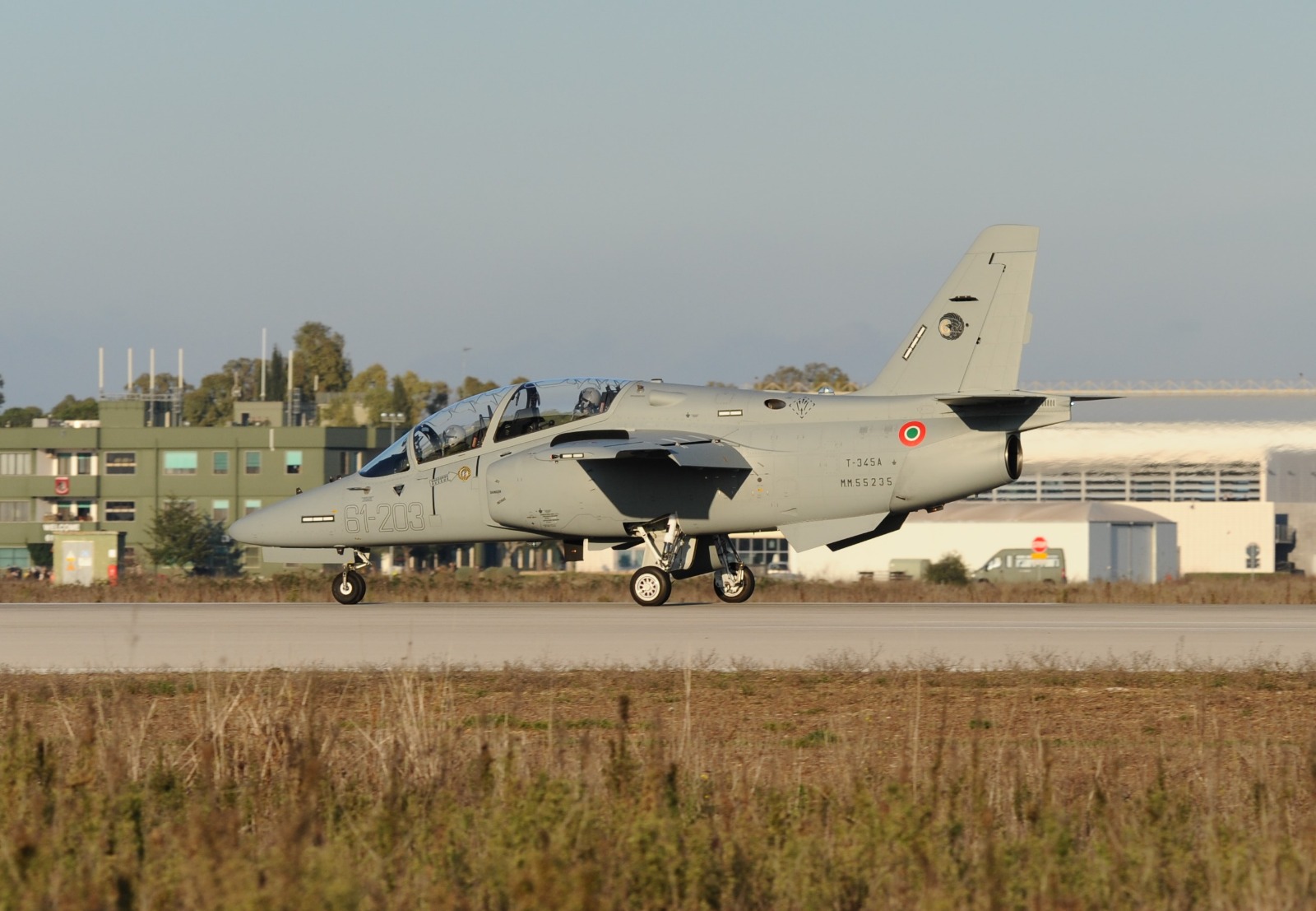

Italy’s M-345 Trainer Enters Service: A New Era for Military Pilot Training
The Italian Air Force has officially brought the Leonardo M-345 jet trainer into operational service, marking a major milestone in its ongoing efforts to modernize pilot training. Replacing the aging MB-339A, which has served since 1982, the M-345 introduces a new generation of technology-driven, cost-effective training capabilities. The aircraft is now active with the 61st Wing at Lecce-Galatina Air Base in southern Italy.
This transition is not just about replacing an old airframe with a new one. It reflects a broader shift in how air forces around the world approach pilot readiness. With embedded simulation, digital avionics, and ground-based training integration, the M-345 represents a significant leap forward in training methodology. It is designed to prepare pilots from the earliest stages for the complexities of fourth- and fifth-generation fighter aircraft.
Leonardo, Italy’s flagship aerospace and defense company, has positioned the M-345 as a cornerstone of its integrated training system. This includes not only the aircraft itself but also simulators and digital tools that streamline and enhance the entire training pipeline. The goal is clear: increase efficiency, reduce costs, and improve pilot performance in a rapidly evolving air combat environment.
Technological Advancements of the M-345
Modern Avionics and Simulation Capabilities
The M-345 is equipped with a fully digital cockpit, featuring three multi-function displays (MFDs), a head-up display (HUD), and an embedded simulation system. These technologies allow pilots to experience realistic combat scenarios without leaving the ground or engaging in live-fire exercises. The embedded simulation capability is particularly noteworthy, as it enables mission rehearsal and tactical training directly from the cockpit.
Such features are essential for preparing pilots for the high demands of modern air combat. As fighter aircraft become more complex, the training systems must evolve accordingly. The M-345’s avionics suite mirrors those found in frontline fighters, allowing for a smoother transition from training to operational platforms like the Eurofighter Typhoon or the F-35 Lightning II.
In addition to its cockpit features, the M-345 supports advanced navigation and mission planning systems. This not only enhances situational awareness but also enables more sophisticated training operations, including simulated combat missions and real-time performance assessments.
“Thanks to the introduction of the M-345… the Italian Air Force will be able to boast the most modern fixed-wing military training system in Europe.”, Stefano Bortoli, Managing Director, Leonardo Aeronautics Division
Cost Efficiency and Operational Readiness
One of the M-345’s most compelling advantages is its cost-effectiveness. According to industry estimates, the M-345 has a direct operating cost of approximately $1,200 per flight hour, substantially lower than many legacy trainers. This makes it an attractive option not only for Italy but also for other countries seeking to modernize their training fleets without breaking the bank.
Leonardo has also integrated an onboard monitoring system that helps reduce maintenance time and costs. This system provides real-time diagnostics, enabling predictive maintenance and improving fleet availability. These efficiencies are critical for air forces operating under tight budget constraints and demanding operational tempos.
Furthermore, the M-345’s single Williams International FJ44-4M-34 turbofan engine provides a balance between performance and maintenance simplicity. With a top speed of 787 km/h (425 KTAS) and a service ceiling of 12,192 meters (40,000 feet), the aircraft meets the performance needs of basic and intermediate training missions.
Integration with Ground-Based Training Systems
The M-345 is part of a larger integrated training ecosystem developed by Leonardo. This includes high-fidelity simulators, computer-based training modules, and a centralized training management system. These tools allow for a seamless transition between classroom, simulator, and live flight training.
Ground-based training reduces the number of flight hours needed for proficiency, which in turn lowers operational costs and environmental impact. It also allows instructors to monitor trainee progress in real-time, adjust scenarios dynamically, and provide immediate feedback.
This holistic approach is in line with global trends in military aviation training, where digital tools are increasingly used to enhance learning outcomes and operational readiness. By investing in such systems, the Italian Air Force is not only modernizing its fleet but also its entire training philosophy.
Strategic Implications and Global Context
Replacing the MB-339: A Historical Shift
The MB-339A has been a fixture of Italian military aviation for over four decades, training generations of pilots and serving in various roles, including aerobatic displays with the Frecce Tricolori. However, its analog systems and higher maintenance demands have made it increasingly outdated in the context of modern air combat training.
By transitioning to the M-345, Italy is not only updating its hardware but also aligning its training doctrine with current and future operational needs. The aircraft is expected to serve in both Phase II (basic) and Phase III (advanced) training roles, bridging the gap between primary trainers and advanced fighter jets.
This shift is emblematic of a broader trend among NATO and allied air forces, many of which are replacing Cold War-era trainers with more versatile, digitally native platforms.
International Market Potential
Leonardo has been actively marketing the M-345 to international customers. The aircraft competes in a growing segment of light jet trainers, alongside models like the Korean KAI T-50 and the Czech L-39NG. Its affordability and advanced features make it a compelling option for countries seeking to modernize their training fleets without incurring the high costs of more advanced platforms.
Several nations have expressed interest in the M-345, particularly those looking for a cost-effective solution that offers both training and light attack capabilities. The aircraft can be equipped with gun pods, rockets, and other light armaments, making it suitable for weapons training and low-intensity conflict scenarios.
Should export contracts materialize, the M-345 could serve as a key pillar in Leonardo’s international defense portfolio, reinforcing Italy’s position in the global aerospace market.
Supporting Italy’s Defense Industrial Base
The M-345 program also contributes to Italy’s domestic defense industry. By consolidating design, production, and support within the country, Leonardo supports high-skilled jobs and technological innovation. This aligns with broader national objectives to maintain strategic autonomy in defense capabilities.
Moreover, the program showcases Italy’s ability to produce world-class aerospace technology, enhancing its credibility and influence within Europe’s defense ecosystem. The M-345 complements other Italian defense exports, including the M-346 advanced trainer and the Eurofighter Typhoon, in which Italy is a key partner.
Ultimately, the M-345 is not just a new aircraft, it is a strategic asset that supports Italy’s military readiness, industrial competitiveness, and international partnerships.
Conclusion
The induction of the Leonardo M-345 into the Italian Air Force marks a pivotal step in the modernization of military pilot training. With its digital cockpit, embedded simulation, and cost-efficient operation, the M-345 is designed to meet the demands of contemporary air combat preparation. It replaces a long-serving but outdated platform, bringing Italy’s training capabilities in line with the latest global standards.
Looking ahead, the M-345’s success in Italy could serve as a model for other nations seeking to upgrade their pilot training systems. With increasing complexity in fighter aircraft and budgetary pressures worldwide, the demand for versatile, affordable, and integrated training platforms is only expected to grow. The M-345 is well-positioned to meet that need.
FAQ
What aircraft does the M-345 replace in the Italian Air Force?
The M-345 replaces the MB-339A, which had been in service since 1982.
What are the key features of the M-345?
It includes a digital cockpit, embedded simulation, integrated maintenance monitoring, and compatibility with ground-based training systems.
Why is the M-345 considered cost-effective?
It has an estimated operating cost of around $1,200 per flight hour, significantly lower than legacy trainers.
Can the M-345 be used for combat?
While primarily a trainer, it can be equipped with light armaments for weapons training and low-intensity missions.
Is the M-345 available for export?
Yes, Leonardo is actively marketing the M-345 to international customers seeking modern, affordable training solutions.
Sources
Photo Credit: Leonardo