
Airlines Strategy
Oman Air Cuts 1000 Jobs in Major Financial Restructuring
Oman Air reduces workforce by 23%, prioritizes national employment, and modernizes fleet to address $1.3B debt under Vision 2040 economic plan.

Oman Air’s recent decision to terminate 1,000 employees marks a pivotal moment in its ongoing efforts to achieve financial stability. As the national carrier of Oman, the airline has faced mounting pressure to address years of accumulated losses, which averaged $390 million annually over the past decade. This restructuring reflects broader challenges in the aviation sector, where airlines globally are recalibrating operations post-pandemic.
The workforce reduction aligns with Oman’s Vision 2040 economic diversification plan, which emphasizes sustainable growth and workforce nationalization. By cutting staff levels from 4,300 to 3,300 employees, Oman Air aims to streamline operations and reduce its reliance on expatriate labor. The move also highlights the delicate balance between fiscal responsibility and maintaining service quality in a competitive regional market.
Oman Air’s restructuring eliminated nearly 23% of its workforce, including 500 expatriate roles and 500 Omani positions. Chairman Saeed bin Hamoud Al Maawali revealed that 45% of pre-restructuring staff worked in non-core departments—three times higher than the 15% industry standard. This imbalance necessitated aggressive cuts to align with operational realities.
The airline offered voluntary retirement packages to ease the transition, with 293 employees accepting severance terms ranging from 12 to 24 months’ salary. An additional 310 staff members took similar packages during the restructuring phase. These measures cost the airline $39 million but are projected to yield long-term savings.
“The redundancies were necessary to align staffing with industry standards,” stated Chairman Al Maawali. “Our focus remains on building a sustainable national carrier.” Oman Air reported a $187 million loss in 2023, excluding interest and tax obligations. With accumulated debts exceeding $1.3 billion, the carrier faced mounting pressure from stakeholders to implement structural reforms. The workforce reduction forms part of a broader strategy that includes fleet optimization and route network adjustments.
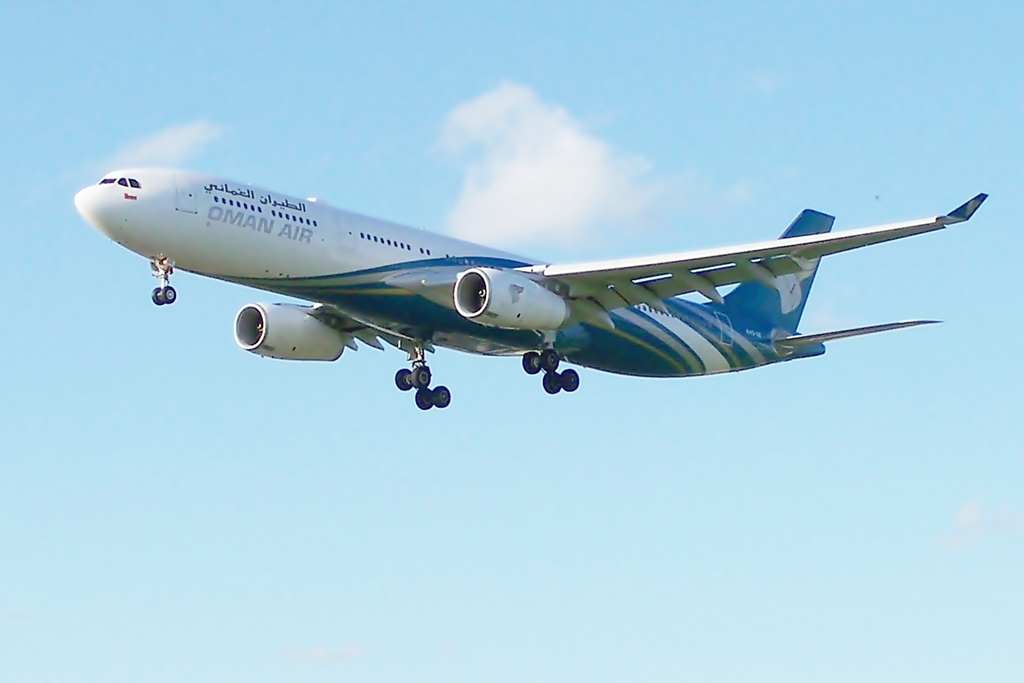
The airline’s active fleet now comprises 33 aircraft, including B737 MAX and B787 Dreamliners, while phasing out older A330s. This modernization effort aims to improve fuel efficiency and align capacity with demand. However, analysts note that staffing cuts alone won’t resolve systemic issues—revenue growth through strategic partnerships remains crucial.
A key outcome of the restructuring is the increase in Omanisation rates from 74.8% to 79.4%. By replacing 487 expatriate workers with Omani nationals, the airline supports government priorities for local employment. The Ministry of Labour collaborated closely on redeployment efforts, offering affected staff priority access to aviation sector vacancies.
CEO Con Korfiatis emphasized the human element: “Our compassionate approach helped employees transition successfully while maintaining operational continuity.” The airline provided career counseling and extended healthcare benefits to departing staff, setting a benchmark for corporate restructuring in the region. Oman Air’s restructuring mirrors global aviation trends where carriers optimize workforces post-pandemic. Middle Eastern competitors like Emirates and Qatar Airways have implemented similar strategies, though Oman’s smaller market presents unique challenges. The success of this overhaul could influence regional approaches to state-owned airline management.
Critics argue that rapid workforce reductions risk damaging employee morale and service quality. Aviation analyst Mark Martin notes: “While necessary, such cuts require careful change management to maintain safety standards and customer satisfaction.” Oman Air’s ability to balance these factors will determine its competitive position.
The airline faces additional pressure from low-cost regional competitors and shifting travel patterns. With 44 destinations and 93 daily flights pre-restructuring, network optimization will be critical to maximizing revenue from reduced operations.
Oman Air’s workforce restructuring represents a bold attempt to correct years of financial mismanagement. By aligning staffing levels with industry norms and prioritizing national workforce development, the carrier aims to establish a sustainable operational model. The $39 million redundancy package underscores the government’s commitment to social responsibility during this transition.
Looking ahead, the airline’s success will depend on complementary strategies like fleet modernization and partnership development. As Middle Eastern aviation continues evolving, Oman Air’s experiment in rapid restructuring may serve as a case study for national carriers navigating post-pandemic realities.
Question: Why did Oman Air cut so many jobs? Question: How will this affect flight operations? Question: What does “Omanisation” mean in this context? Sources: ch-aviation, Gulf News, AGBI, The Arabian Stories
Oman Air’s Workforce Restructuring: A Strategic Overhaul
The Scale of Workforce Reductions
Financial Context and Operational Realities
Omanisation and Workforce Nationalization

Industry Implications and Future Outlook
Challenges in Execution
Conclusion
FAQ
Answer: The airline needed to reduce annual losses exceeding $187 million and align its workforce with industry staffing ratios.
Answer: Oman Air maintains 93 daily flights using a streamlined fleet, with automation offsetting reduced staff numbers.
Answer: It refers to increasing the percentage of Omani nationals in the workforce, now at 79.4% post-restructuring.
Photo Credit: Wikimedia
[mc4wp_form id=1060]




Airlines Strategy
Pegasus Airlines Completes €154M Smartwings Acquisition
Pegasus Airlines finalizes €154M acquisition of Czech Airlines and Smartwings Group, forming a 175-aircraft combined fleet.
Pegasus Airlines has finalized its €154 million acquisition of Czech Airlines and Smartwings Group, securing a significant operational foothold in the Central and Eastern European leisure aviation market.
The transaction, officially completed on October 1, 2026, follows regulatory clearance and merges the Turkish low-cost carrier’s network with the Czech Republic’s largest leisure operator. According to a press release issued by Smartwings, the combined entity now operates a fleet of more than 175 aircraft.
The acquisition provides Istanbul-based Pegasus Airlines with direct access to the Central European market, strengthening its capacity in point-to-point and leisure travel between the European Union and Türkiye. Pegasus currently operates flights to 161 destinations across 57 countries, having carried a record 43.3 million passengers in 2025. Smartwings adds a network of 80 destinations across 20 countries to the group portfolio.
Moving forward, Pegasus Airlines will begin the operational integration of the Smartwings fleet and IT structures into its established low-cost business model. However, Smartwings will continue to operate under its own brand for passenger-facing operations, maintaining its daily flight schedules and customer relations.
Güliz Öztürk, CEO of Pegasus Airlines, noted that the company has grown its fleet from 14 to 127 aircraft since adopting the low-cost model in 2005.
A shared vision has emerged with Czech Airlines and Smartwings management: together, we aim to spread our wings across Europe with two distinctive brands, Smartwings and Pegasus Airlines. This integration is not just about growth, but about creating resilient, technology-driven companies that put safety at the heart of operations. The path to finalizing the acquisition required navigating European competition regulations. On September 11, 2026, the Czech Office for the Protection of Competition (ÚOHS) granted conditional approval for the merger.
To prevent a monopoly on the highly trafficked Prague-Antalya route, the regulatory authority required Pegasus to transfer a specified number of summer-season airport slots to an independent competitor. This divestiture mandate will take effect beginning with the Summer 2027 scheduling season, ensuring continued market competition for leisure travelers flying between the Czech Republic and the Turkish Riviera.
The completion of the deal marks the final chapter in a lengthy corporate restructuring for Czech Airlines (ČSA), one of the world’s oldest airline brands. Founded in 1923, ČSA underwent significant financial reorganization following bankruptcy proceedings. The legacy carrier ceased independent flight operations on October 26, 2024, and was subsequently transformed into a holding company.
Under this new corporate structure, Smartwings, which was founded in 1997 as Travel Service, became the wholly owned operating subsidiary of the ČSA holding company. Smartwings operates scheduled, charter, and private business-jet flights, managing subsidiaries in Poland, Slovakia, and Hungary. Pegasus Airlines initially signed the agreement to acquire the restructured Czech Airlines and Smartwings Group on December 8, 2025. The agreed transaction value of €154 million encompassed both companies and their related receivables. With the acquisition now closed, the combined group holds firm orders for 140 new aircraft to support future network growth.
The acquisition represents a strategic pivot for Pegasus Airlines, allowing the Turkish carrier to deepen its penetration into the European Union’s point-to-point leisure market while bypassing some of the bilateral constraints that typically limit non-EU operators. By maintaining the Smartwings brand while integrating its fleet and IT infrastructure into the Pegasus low-cost model, the operator can leverage established European charter relationships without diluting its core brand identity. The required slot divestiture on the Prague-Antalya route highlights the strict regulatory scrutiny facing cross-border airline consolidation in Europe, even for predominantly leisure-focused networks.

Strategic expansion and dual-brand integration
Regulatory hurdles and antitrust conditions
Restructuring a historic European brand
AirPro News analysis
Photo Credit: Smartwings
Airlines Strategy
Air France-KLM Final Offer for TAP Air Portugal Stake
Air France-KLM submits final bid for up to 49.9% of TAP Air Portugal, with a decision expected in mid-October 2026.
Air France-KLM has submitted its final, revised offer to acquire a stake of up to 49.9 percent in TAP Air Portugal, proposing to establish Lisbon as the Franco-Dutch airline group’s exclusive Southern European hub.
The September 30, 2026, submission to the Portuguese state holding company Parpública marks the culmination of a highly competitive bidding process. According to a press release issued by Air France-KLM, the proposal is backed by SkyTeam alliance partner Delta Air Lines (DL) and outlines a comprehensive strategy to integrate the Portuguese flag carrier into its global network while preserving the airline’s national identity.
Air France-KLM (AF/KL) detailed a five-point strategic plan designed to secure the approval of the Portuguese government. The proposal centers on maintaining the distinct Portuguese identity of TAP Air Portugal (TP), developing Lisbon Airport (LIS) as an exclusive Southern European hub, and significantly expanding transatlantic connectivity.
The plan emphasizes collaboration with the approximately 9,000 employees currently working for TAP. The bid also proposes combining existing assets across passenger, cargo, loyalty, and Maintenance, Repair, and Overhaul (MRO) operations to generate structural efficiencies.
“Our interest in TAP is stronger than ever, and we are excited to present this Final Offer for up to 49.9% of TAP. Over the past four weeks, our team plus our advisors have worked diligently to strengthen our bid, and I am convinced that this revised proposal is the best path forward for TAP, its management, its employees and its customers, as well as for Portugal,” said Benjamin Smith, CEO of Air France-KLM. Smith noted that the long-term strategic plan is designed to safeguard Portugal’s connectivity and sovereignty while creating job and value growth throughout the country.
The bid received formal backing from Delta Air Lines and the broader SkyTeam alliance. The partnership with Delta would provide TAP customers with access to 375 destinations across North America and South America, a key selling point in Air France-KLM’s pitch to enhance Portugal’s connectivity on the North Atlantic market.
The Portuguese government officially relaunched the privatization process for TAP in July 2025. The structure of the sale dictates that the state will retain majority control of the flag carrier. The maximum 49.9 percent stake available is divided into two tranches: 44.9 percent is allocated for a strategic airline investor, while the remaining 5 percent is reserved specifically for TAP Air Portugal employees.
Air France-KLM initially submitted a non-binding offer for a minority stake on April 2, 2026. This was followed by an initial binding offer submitted to Parpública on July 29, 2026.
In early September 2026, the Portuguese government invited both Air France-KLM and Lufthansa Group to a supplementary negotiation phase. Authorities deemed the July 2026 binding bids too close to call, prompting the request for improved final offers. During this supplementary phase, International Airlines Group (IAG), the parent company of British Airways and Iberia, formally withdrew from the bidding process. The withdrawal of IAG left Air France-KLM and Lufthansa as the sole remaining contenders for the stake.
TAP Air Portugal operates a primary hub at Lisbon Airport and a secondary hub at Porto Airport (OPO). The airline’s mainline fleet consists of approximately 96 aircraft, operating an all-Airbus lineup that includes the Airbus A320neo, Airbus A321neo, and Airbus A330neo. A regional subsidiary, TAP Express, operates a mix of Embraer and ATR aircraft.
The privatization of TAP represents one of the last major consolidation opportunities in the European aviation market. The continent’s three largest aviation groups have spent recent years absorbing remaining midsize flag carriers. Lufthansa Group recently acquired a stake in Italy’s ITA Airways, while Air France-KLM successfully acquired a stake in Scandinavia’s SAS.
Bidders highly value TAP for its extensive transatlantic network. The Portuguese carrier holds a leading position on routes connecting Europe with Brazil and Lusophone Africa, markets that offer significant growth potential and high yields for the acquiring airline group.
The Portuguese government and Parpública are expected to evaluate the final offers and announce the winning bidder for the partial privatization in mid-October 2026.
We view the acquisition of TAP Air Portugal as the final major chess piece in the current cycle of European airline consolidation. With IAG exiting the process, the head-to-head contest between Air France-KLM and Lufthansa Group highlights the strategic scarcity of independent, mid-sized European flag carriers with strong geographic advantages.
For Air France-KLM, securing TAP is a defensive and offensive necessity. Lufthansa’s acquisition of a stake in ITA Airways significantly expanded the German group’s footprint in Southern Europe. Integrating TAP would allow Air France-KLM to counter that expansion while securing absolute dominance in the Europe-to-South America market. TAP’s structural geographic advantage in Lisbon makes it an ideal connecting point for transatlantic traffic, bypassing the congestion and capacity constraints of Northern European hubs like Paris Charles de Gaulle and Amsterdam Schiphol.

A five-point strategy for Lisbon and beyond
The privatization timeline and bidding structure
Fleet integration and European market consolidation
AirPro News analysis
Photo Credit: Air France-KLM
Airlines Strategy
Alaska Airlines to Join Atlantic and Pacific Joint Businesses
Alaska Airlines and American Airlines announce plans for Alaska to join transoceanic joint businesses, filing for antitrust immunity soon.
Alaska Airlines and American Airlines announced on September 29, 2026, their intent to integrate the Seattle-based carrier into the Atlantic and Pacific Joint Businesses, a move that will allow Alaska to coordinate schedules and share revenue on transoceanic routes with oneworld alliance partners.
In a press release, Alaska Airlines stated the integration is a core component of its “Alaska Accelerate” strategy, designed to transform the carrier into a more global entity following its combination with Hawaiian Airlines. The airlines anticipate filing for antitrust immunity with the U.S. Department of Transportation (DOT) and international regulators in the coming months.
The announcement coincided with Alaska Air Group hosting its 2026 Investor Day in Seattle on September 29, 2026. During the event, the company entered the activation phase of its Alaska Accelerate strategic plan. First introduced in December 2024, the plan shifts the company’s focus from the integration of Hawaiian Airlines toward investments aimed at building a more global and premium airline.
As part of this initiative, Alaska Airlines has raised its long-haul ambitions. The carrier is now targeting 15 long-haul international routes from Seattle-Tacoma International Airport (SEA) by 2030, an increase from its previous target of 12.
Andrew Harrison, Executive Vice President and Chief Commercial Officer for Alaska Airlines, emphasized the competitive necessity of the move.
“Alaska Accelerate is about building a stronger, more global airline for our guests, and expanding our partnership with American is an important step in that strategy. Joining these joint businesses would put Alaska on equal footing with its competitors by giving our guests more seamless access to international destinations while preserving the care, loyalty benefits and premium experience they expect from Alaska,” Harrison said. Joint businesses in commercial aviation extend beyond standard alliance codeshare agreements. They allow participating airlines to act as unified commercial entities on specific routes, enabling metal-neutral revenue sharing, coordinated transoceanic schedules, and deep international booking alignment. Implementing these structures requires antitrust immunity from regulatory authorities.
By joining the Atlantic Joint Business (AJB) and Pacific Joint Business (PJB), Alaska Airlines will align commercially with American Airlines and several International Airlines Group (IAG) carriers, including British Airways, Iberia, Aer Lingus, and LEVEL, as well as Finnair and Japan Airlines.
Nat Pieper, Chief Commercial Officer for American Airlines, noted that the expanded partnership enhances a global network that provides customers with greater access and convenience.
Representatives from the international partner airlines echoed the sentiment. Julio Rodríguez Contreras, Chief Commercial Strategy Officer for IAG, stated that Alaska Airlines will further strengthen the partnership and help expand travel options on both sides of the Atlantic. Ross Leggett, Senior Managing Executive Officer and Senior Vice President of Route Marketing for Japan Airlines, added that the expansion will strengthen the combined network between Asia and North America. The Atlantic Joint Business was formed in 2010 and has operated across the North Atlantic for 15 years, coordinating service and revenue sharing among its European and North American members. The Pacific Joint Business was launched shortly thereafter, marking a 15-year partnership between American Airlines and Japan Airlines.
American Airlines, a founding member of the oneworld alliance, operates more than 6,000 daily flights to over 350 destinations in more than 60 countries. The carrier, which traces its roots back to an air mail operation in 1926 and celebrates its centennial in 2026, employs 130,000 aviation professionals and serves over 200 million customers annually.
Alaska Air Group operates hubs in Seattle, Honolulu, Portland, Anchorage, Los Angeles, San Diego, and San Francisco. Together with Hawaiian Airlines and Horizon Air, the combined group flies to more than 140 destinations across North America, Latin America, Asia-Pacific, and Europe. Both Alaska and Hawaiian are members of the oneworld alliance.
We view Alaska Airlines’ entry into these joint businesses as a structural shift in the U.S. airline market. By securing antitrust immunity and metal-neutral revenue sharing, Alaska transitions from a domestic feed provider to a full commercial partner on global routes. This integration effectively fortifies the oneworld alliance’s position in the Pacific Northwest, providing a unified competitive response to rival hub operations at Seattle-Tacoma International Airport and strengthening transpacific flows.

Strategic expansion under Alaska Accelerate
Joint business mechanics and partner alignment
Evolution of the transoceanic partnerships
AirPro News analysis
Photo Credit: Alaska Airlines

-

 Business Aviation4 days ago
ACJ Study: Family Offices Drive Business Aviation Demand
-

 Space & Satellites5 days ago
NASA Names SpaceX Crew-14 Astronauts for Spring 2027 ISS Mission
-

 Space & Satellites4 days ago
NASA SpaceX Crew-12 Return Targets October 7 Undocking
-

 Defense & Military6 days ago
Coast Guard Awards $735M Contract for Six C-130J Aircraft
-

 Aircraft Orders & Deliveries5 days ago
ACG Delivers Sixth Boeing 737-8 to Royal Air Maroc