Business Aviation
London City Airport Debuts E195-E2: Capacity Meets Sustainability
LCY welcomes Helvetic’s Embraer E195-E2 jet with 30% lower emissions and advanced noise reduction, enabling expanded routes while maintaining operational limits.

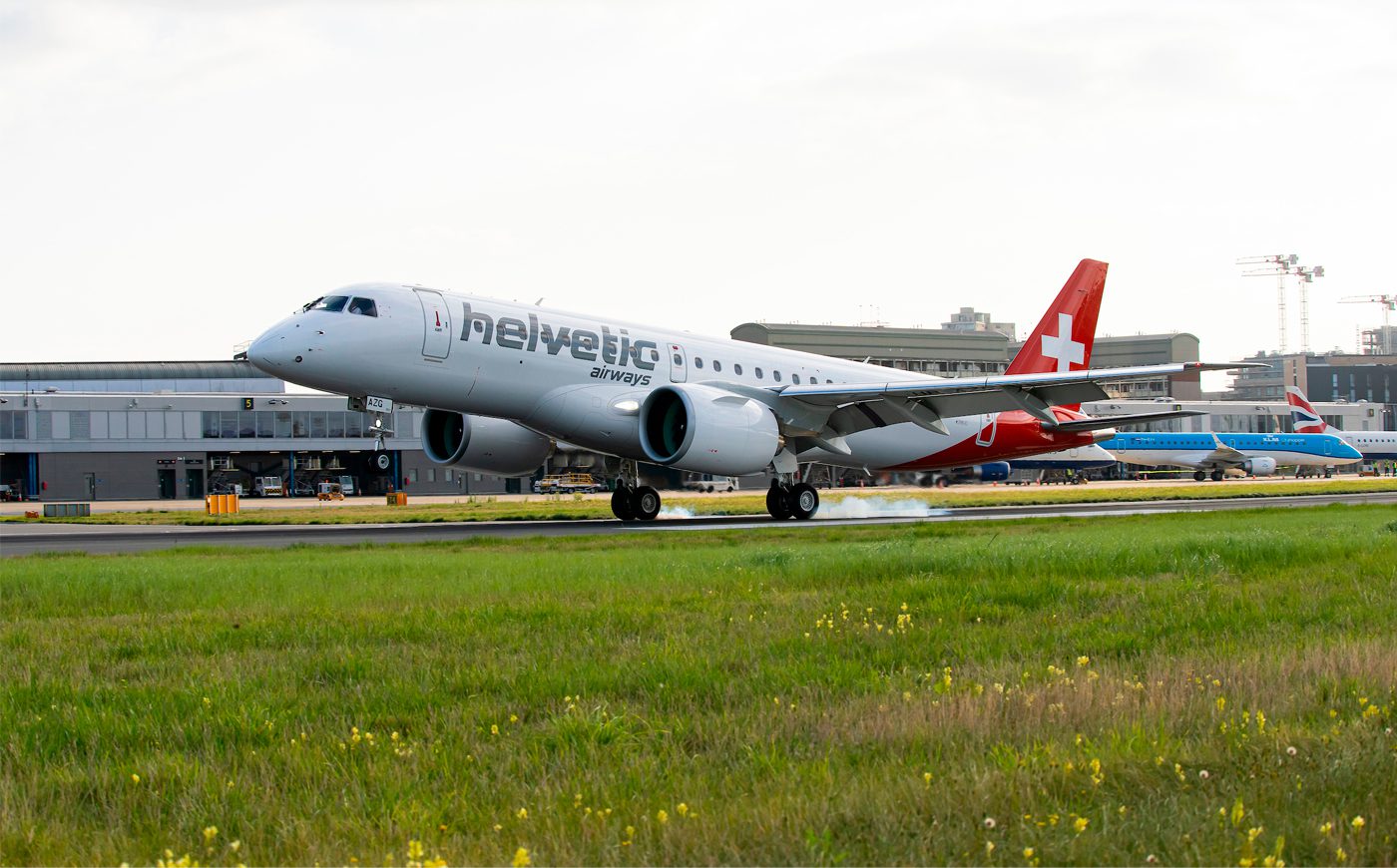
London City Airport (LCY) has entered a new era of operations with the historic landing of Helvetic Airways’ Embraer E195-E2. This 134-seat jet now holds the title of largest commercial aircraft serving the Docklands-based airport, surpassing previous operational limits set by LCY’s unique 5.5° glide path and 1,500m runway. The March 2025 debut flight from Zurich marks a strategic shift for an airport that primarily serves business travelers with smaller regional jets.
The achievement represents more than just size – it demonstrates evolving aviation technology meeting stringent environmental and operational requirements. With 30% lower CO2 emissions per seat and 63% reduced noise footprint compared to previous generation aircraft, the E195-E2 aligns with LCY’s sustainability goals while expanding passenger capacity without increasing flight movements.
The E195-E2’s certification for LCY operations required solving multiple engineering challenges. Its Enhanced Approach and Landing Automation System handles the airport’s steep 5.5° approach (nearly double the standard 3° glide path). The aircraft’s 41.5m length demanded precision braking systems to stop within the short runway, achieved through carbon brakes absorbing 30% more energy than previous models.
Embraer’s upcoming E2TS takeoff optimization system promises further improvements. When certified, this technology will increase the E195-E2’s range from LCY by 25% (3,200km to 4,000km), potentially enabling routes to Athens, Cairo, and Gran Canaria. Current performance already allows 3-hour flights to 90% of European business hubs.
“The E195-E2’s noise reduction alone is game-changing – equivalent to removing 27,000 cars from London’s roads annually,” notes Embraer’s Marie-Louise Philippe. Helvetic’s wet-lease operation for SWISS International Air Lines demonstrates LCY’s growing appeal for full-service carriers. The E195-E2’s 134 seats (20% more than LCY’s previous largest E190-E2) enable better economics on premium routes – crucial when LCY’s passenger cap stands at 6.5 million annually.
Airport CEO Alison FitzGerald emphasizes this growth strategy: “Each E195-E2 flight carries 34 more passengers than previous jets, helping maximize our capacity without breaching movement limits.” The aircraft’s 2,800kg/hour fuel burn translates to 18% lower operating costs per seat, making marginal routes economically viable.
LCY’s push for A320neo operations (156 seats) faces technical hurdles. While Airbus narrowbodies offer 16% more capacity, their 37m wingspan versus E195-E2’s 28.7m requires revised taxiway clearances. The airport’s 2024 masterplan includes £25 million in infrastructure upgrades to accommodate larger aircraft. Environmental groups remain cautious. Clean Air London estimates the E195-E2’s NOx emissions at 12% below previous jets, but total emissions could rise with increased passenger numbers. Airport officials counter that new Sustainable Aviation Fuel (SAF) partnerships aim for 10% SAF usage by 2028.
The E195-E2’s LCY debut represents a balancing act between operational constraints and aviation progress. By leveraging next-gen aircraft capabilities, the airport enhances its position as Europe’s premier business aviation hub while addressing environmental concerns through technological innovation.
Looking ahead, LCY’s evolution will test the aviation industry’s ability to reconcile growth with sustainability. As Embraer and Airbus compete for the airport’s future fleets, the real winners may be travelers gaining premium connectivity from central London to an expanding network of European and North African destinations.
Why can’t regular jets land at London City Airport? How does the E195-E2’s range compare from LCY? Will larger aircraft increase flight noise? Sources:
London City Airport’s New Aviation Milestone
Technical Breakthroughs Enabling LCY Operations
Operational and Economic Impacts
Future Expansion and Challenges
Conclusion
FAQ
The combination of steep 5.5° approach angle, short runway, and urban location requires specialized aircraft certification and pilot training.
Current 3,200km range covers Western Europe, expanding to 4,000km with upcoming takeoff system enhancements.
Despite more seats, the E195-E2’s noise footprint is 63% smaller than previous generation aircraft through improved engines and approach procedures.
London City Airport,
Aerospace Global News,
Aviation24