Defense & Military
Indonesia’s Naval Shift: Garibaldi Carrier Deal Reshapes ASEAN Defense

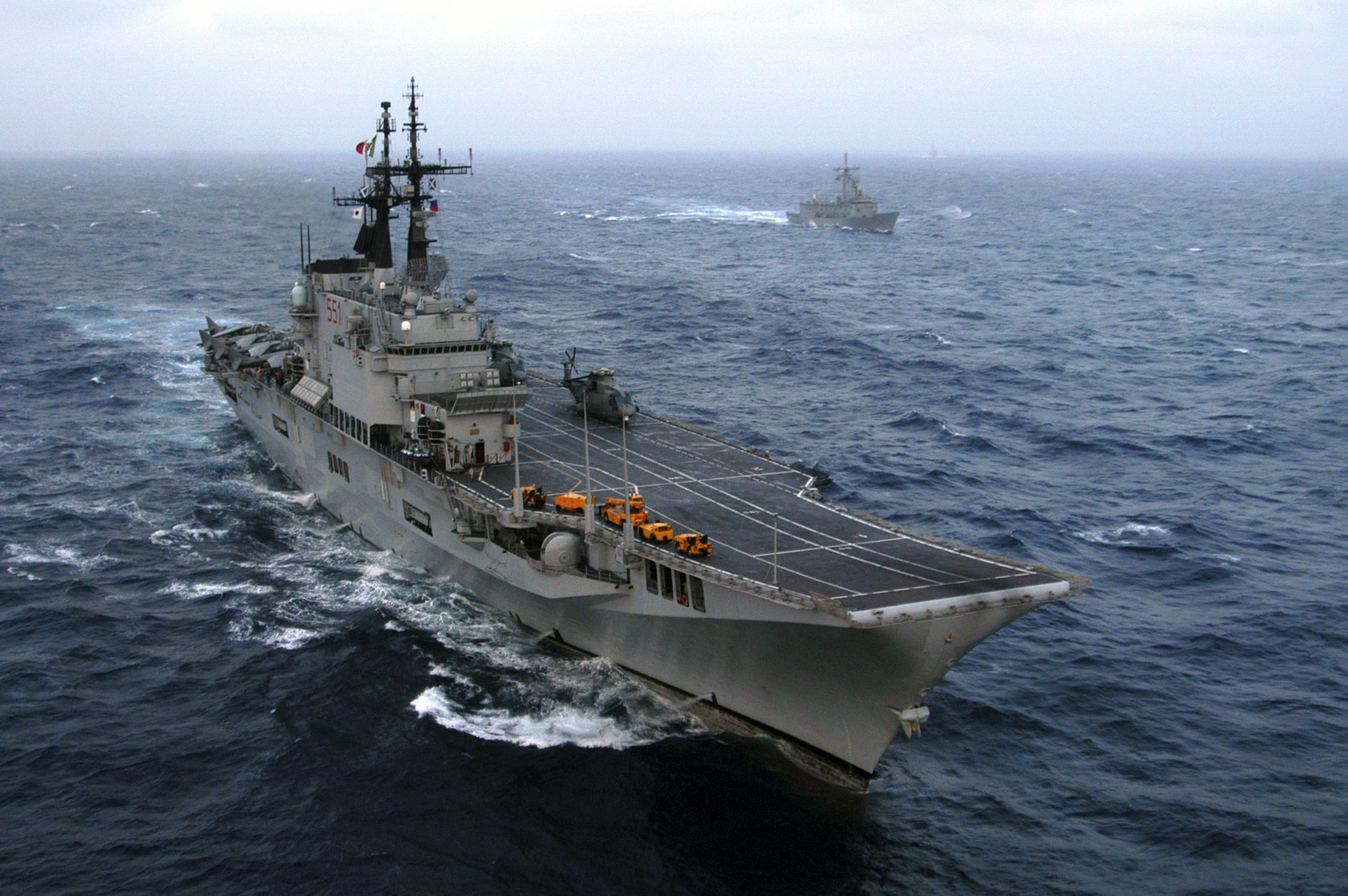

Indonesia’s Naval Modernization & the Giuseppe Garibaldi Acquisition
Indonesia’s potential acquisition of Italy’s retired aircraft carrier ITS Giuseppe Garibaldi marks a strategic shift in Southeast Asia’s maritime dynamics. As the world’s largest archipelagic nation, Indonesia faces unique challenges in securing its 17,000 islands and 54,720 km coastline. The move aligns with growing regional tensions, particularly China’s assertive claims in the South China Sea near Indonesia’s Natuna Islands.
The Giuseppe Garibaldi offers Indonesia an immediate capability boost without the decade-long wait for new builds. With a displacement of 13,850 tons and 174-meter flight deck, it could deploy helicopters and AV-8B Harrier jets for both defense and disaster response. This comes as Jakarta accelerates its Minimum Essential Force (MEF) modernization program, aiming to counterbalance regional military expansions while addressing frequent natural disasters.
ins class=”adsbygoogle”
style=”display:block; text-align:center;”
data-ad-layout=”in-article”
data-ad-format=”fluid”
data-ad-client=”ca-pub-1740963551665050″
data-ad-slot=”5893782519″>
Strategic Imperatives Behind the Deal
Indonesia’s Navy (TNI-AL) requires multirole platforms to address competing priorities. Admiral Muhammad Ali notes that 67% of natural disasters between 2020–2024 required naval response, including the 2024 Sunda Strait tsunami that displaced 120,000 people. The Garibaldi’s 1,200-person capacity and 4,000-ton cargo space make it ideal for humanitarian missions, while its Harrier jets could patrol disputed fisheries generating $4.6 billion annually.
The MEF’s Phase III (2025–2029) specifically budgets $2.1 billion for “strategic lift assets.” Compared to new LHDs costing $800 million each, retrofitting the Garibaldi at an estimated $300 million offers fiscal efficiency. This aligns with Indonesia’s parallel investments – two Italian PPAs ($650 million), Turkish KCR-60 missile boats ($120 million each), and domestic-built Raden Eddy Martadinata-class frigates.
“A carrier isn’t about power projection – it’s about presence. Each disaster-ready ship deters opportunistic moves in our EEZ,” explains Defense Ministry spokesperson Frega Wenas.
The Garibaldi’s Technical Edge
Despite its 1985 launch, the Giuseppe Garibaldi received critical upgrades. Its 2013 refit added C-band radar and SICRAL satellite comms, enabling network-centric operations. The COGAG propulsion delivers 30-knot speeds – crucial for intercepting illegal fishing fleets that cost Indonesia $20 billion annually. The 6° ski-jump ramp allows Harriers to take off with 4,500 kg payloads, sufficient for anti-ship missiles like the Marte ER.
Indonesia’s proposed package includes 18 AV-8B IIs from Italian stocks. These STOVL jets would complement existing F-16s and Su-30s, filling gaps until 2030 when KF-21 Boramae fighters arrive. Maintenance challenges remain – the Garibaldi’s LM2500 turbines differ from Indonesia’s German MTU-powered frigates. However, PT PAL’s Batam shipyard has experience with GE engines through its CN235 maritime patrol fleet.
Regional Security Calculus
The acquisition occurs amid heightened South China Sea tensions. China’s 2024 deployment of the Type 075 LHD to the Natuna EEZ prompted Jakarta to accelerate naval plans. While Indonesia isn’t a claimant, overlapping EEZs with Vietnam and Malaysia require constant patrols. The Garibaldi’s 7000-nmi range allows 45-day deployments without refueling – critical for covering Indonesia’s 6.4 million km² EEZ.
Comparatively, Thailand’s HTMS Chakri Naruebet (1997) rarely sails due to costs, while India’s INS Vikramaditya operates MiG-29Ks. The Garibaldi’s smaller scale suits Indonesia’s needs – its 16-aircraft complement matches TNI-AU’s squadron sizes. Analyst Rizal Taufik suggests: “This isn’t about matching China’s carriers. It’s mobile infrastructure for our ‘porous borders’ strategy – visible sovereignty enforcement.”
Operational Challenges & Future Steps
While the Garibaldi offers immediate capabilities, integration hurdles persist. Indonesia lacks carrier-trained crews – only 12% of naval aviators have STOVL experience from joint exercises with the USMC. The proposed deal includes Italian training programs, but Admiral Yudo Margono admits it could take 3–5 years to achieve full operational capacity.
Long-term, PT PAL plans domestic carriers. Their 2023 mockup of a 24,000-ton LHD with South Korean DSME reflects ambitions beyond secondhand acquisitions. However, budget realities favor incremental steps – the Garibaldi would be Southeast Asia’s third active carrier after Thailand and China’s Hainan-based fleet.
“Carriers aren’t silver bullets, but they force neighbors to take your navy seriously,” notes Singapore-based strategist Collin Koh.
Conclusion
Indonesia’s Garibaldi pursuit reflects pragmatic defense policy – leveraging available assets to address immediate needs while building domestic capacity. The carrier enhances disaster response and maritime patrol capabilities without the fiscal strain of new builds. However, its success depends on overcoming crewing challenges and maintaining aging systems.
Looking ahead, this acquisition could catalyze regional naval trends. Vietnam and Malaysia monitor Indonesia’s progress as they consider their own aviation ships. For Jakarta, the Garibaldi isn’t just a military asset – it’s a floating symbol of archipelagic sovereignty in contested waters.
FAQ
Why does Indonesia need an aircraft carrier?
Indonesia requires versatile platforms for disaster relief, fishery patrols, and sovereignty enforcement across its vast archipelago. The Garibaldi serves multiple roles more cost-effectively than specialized ships.
How does this affect China-Indonesia relations?
While not directly confrontational, enhanced Indonesian capabilities complicate China’s South China Sea operations near the Natuna EEZ. Jakarta maintains neutrality but strengthens deterrence.
Can Indonesia maintain a 40-year-old carrier?
PT PAL’s modernization expertise and Italian technical support mitigate risks. The ship’s 2013 refit extends its service life to ~2035, aligning with domestic LHD plans.
Sources:
EurAsian Times,
Army Recognition,
Wikipedia